

A plate can have the smooth finish of ceramic without being made from clay. If you have picked up a rigid, relatively light plate in a restaurant or looked at patterned cups and bowls for a new range, you may have come across melamine. The name describes a material used across tableware, not just one style of plate.
Melamine dinnerware is reusable tableware made from a hard, thermosetting plastic based on melamine-formaldehyde resin. It includes plates, bowls, cups and serving pieces, often with a ceramic-like finish. It is used for serving rather than cooking or reheating. When choosing it, check the finished product’s food-contact documentation and care instructions for the use you have in mind.
The useful question is whether melamine fits the way you serve food. A restaurant may care most about handling and stacking, while a retailer may focus on shapes and printed designs. Start with those needs, then compare the actual samples and their use instructions.
What Is Melamine Dinnerware Made Of?
Melamine dinnerware is a type of plastic tableware. Melamine and formaldehyde react to form a resin that cures into a rigid structure during molding. The finished resin is different from the individual chemicals used to make it. However, that does not mean migration is impossible: the FDA’s explanation of melamine tableware describes how small residual amounts can migrate under certain conditions.
Tableware molding compounds can also contain fillers such as cellulose and other formulation ingredients. A commercial description such as “100% melamine” should therefore be read alongside the supplier’s material specification, rather than treated as a complete chemical recipe. See the section on A5 and material descriptions below.
What does “thermosetting” mean?
Once the material has cured, it does not soften back into a moldable liquid in the way many thermoplastics do. Think of the difference between setting a material permanently and simply cooling a melted material. This explains its rigidity, but it does not make a melamine bowl suitable for a microwave or oven.
| Material type | Behavior after manufacture | What this means for a buyer |
|---|---|---|
| Thermoset, such as melamine-formaldehyde resin | Cures into a permanent structure; cannot simply be melted and reshaped. | A rigid product, with use limits that still need to be followed. It is not microwave cookware. |
| Thermoplastic, such as polypropylene (PP) | Can soften when heated and be reprocessed under suitable conditions. | Performance varies by formulation and product. Only use it for microwave heating when the actual item is labeled for that use. |
Being technically reprocessable does not mean a product is accepted by your local recycling service. Likewise, reusable melamine should not be described as biodegradable or compostable.
How the shape and decoration are made
The molding compound is shaped under heat and pressure, then the piece is finished and checked. Printed designs may be applied using decorative paper during molding, with a surface layer over the decoration. The mold determines features such as depth, rim and foot; the artwork determines the printed appearance.
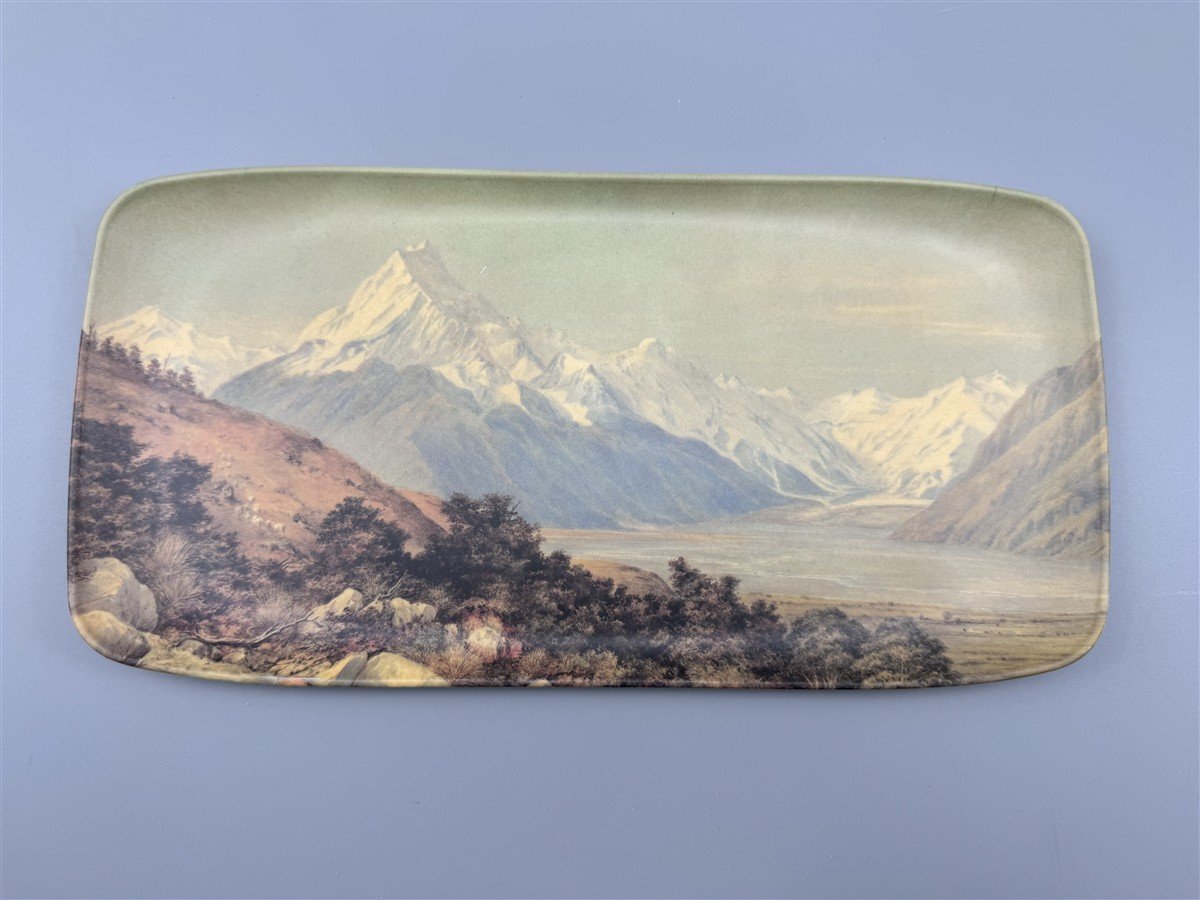
A plain white bowl, a patterned plate and a landscape-print tray can therefore use the same broad material family while serving very different purposes. The manufacturing image above is a schematic illustration of the process, rather than a photograph of our production line.
What Types of Melamine Tableware Are Available?
Melamine tableware extends beyond dinner plates. We offer plates, bowls, cups and trays, and the dimensions worth checking differ for each. A matching print can bring a range together, but each item still needs to work on its own.
Plates: check the usable area, not only the diameter
Round, oval and rectangular plates come with different rims and depths. Two plates with the same outside width can leave very different amounts of space for food. Use an actual portion or a paper outline when comparing samples; also check where a logo or decorative border will sit once the plate is in use.
For example, the 20 cm plate in our restaurant plate project carries a restaurant logo and border. That is a specific size and design, not a size recommendation for every main course.
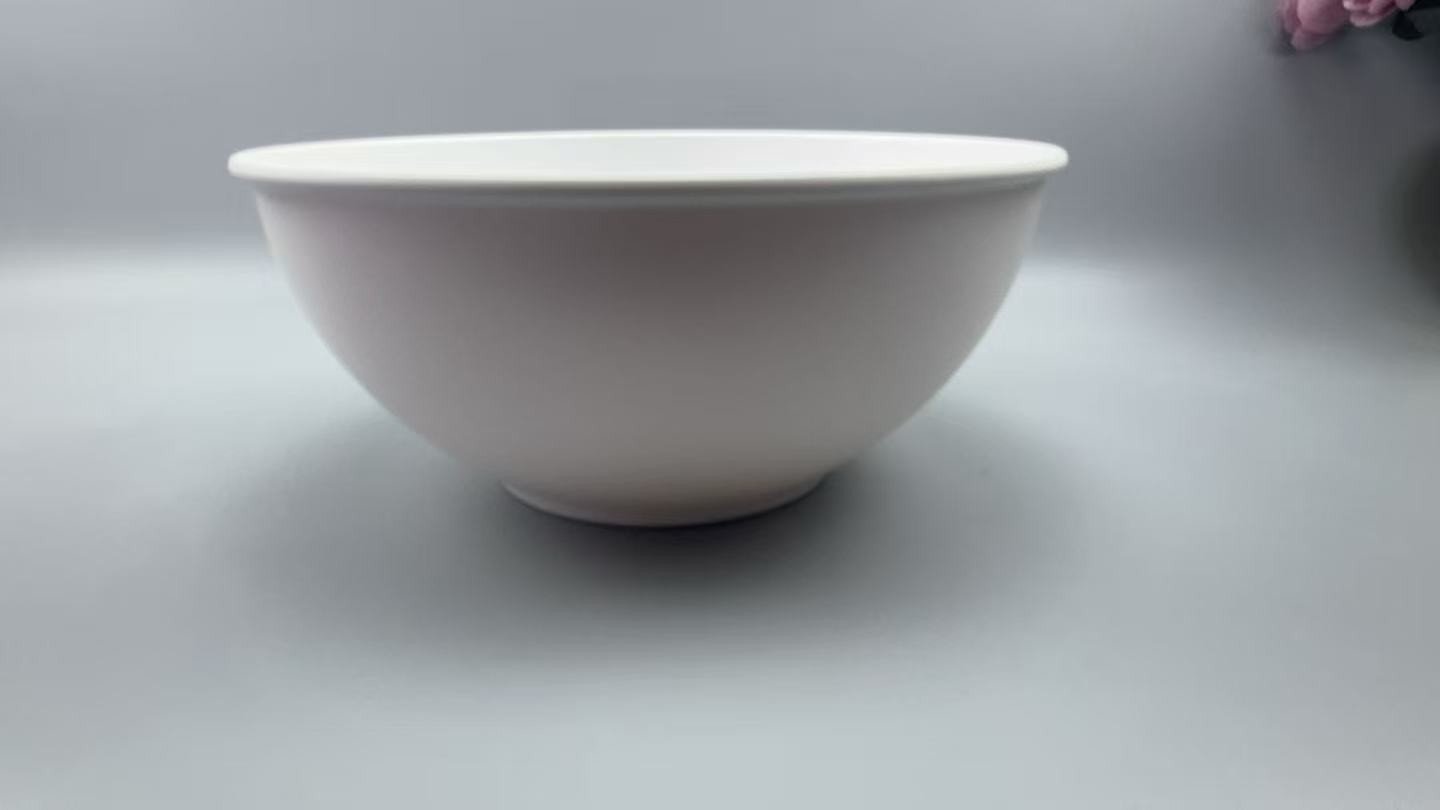
Bowls: capacity, depth and grip change the experience
A broad, shallow bowl and a deep bowl can share a similar diameter but have different capacities. Ask whether the quoted capacity is measured to the brim or represents a practical serving fill. Look at the side profile, how the rim feels when carried, and whether the base sits steadily on a table.
Cups: compare the rim, capacity and handling
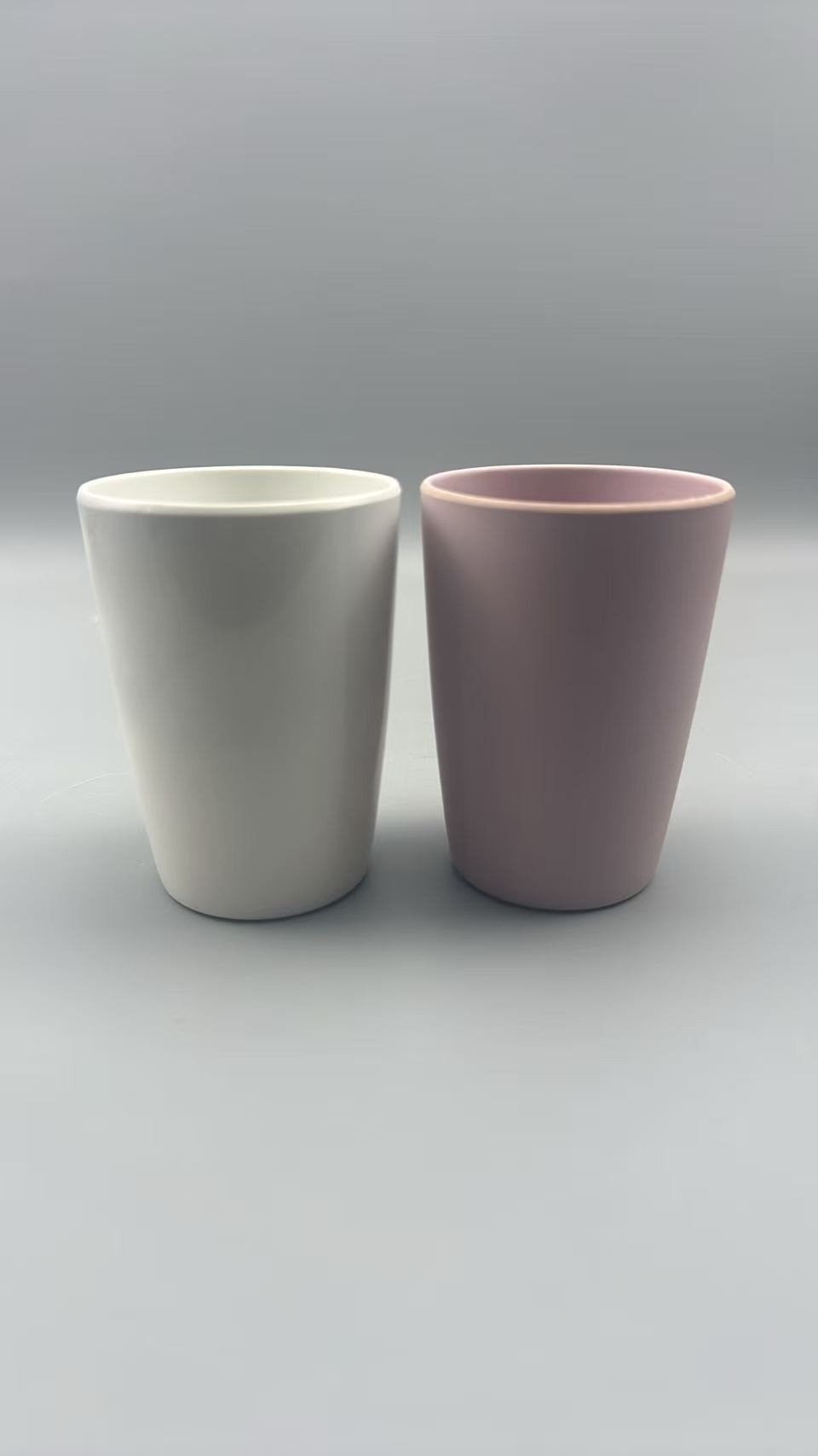
Cups may have handles or a simple tumbler shape. Check the rim, the grip when the cup is filled, and the space it needs in storage. Cup shape alone does not establish suitability for hot drinks; the food-contact conditions and care information apply here too.
Trays and serving pieces: distinguish display from carrying
A serving tray used to carry several items needs enough usable space and a comfortable edge to grip. A display tray may be chosen primarily for its shape and presentation. Check the base, corners and fit with the counter, shelf or service equipment it will sit on. For carrying drinks or several dishes, ask for the tray’s load guidance and check how comfortably you can grip it when loaded.
You can compare our plates, bowls, cups and trays once you have decided which shapes your range needs.
How Does Melamine Compare with Ceramic and Other Plastics?
Melamine belongs to the plastics family; “melamine versus plastic” usually means comparing it with another plastic, such as PP. Ceramic is a different material family. Appearance alone is a poor way to identify any of them, especially when finishes are designed to resemble one another.
| Buying consideration | Melamine | Ceramic or porcelain | Other plastics, such as PP |
|---|---|---|---|
| Feel and appearance | Rigid; available in plain colors and printed finishes. | Often heavier, with a fired body and glaze; weight varies. | Can be lighter or more flexible; construction varies widely. |
| Breakage and wear | Resists many everyday knocks, but can chip, crack or scratch. | Can chip or shatter; performance depends on the body and design. | May flex, scratch or deform, depending on the product. |
| Microwave use | Do not use for microwave heating. | Use only when the item is specified as microwave-safe; decoration matters. | Use only when the actual product is specified as microwave-safe. |
| Cleaning | Follow the product’s dishwasher and detergent instructions. | Check the glaze, decoration and care label. | Check the product rating; not every plastic item is dishwasher-safe. |
| Cost comparison | Include sample, printing, shipping and replacement costs. | Include weight, shipping, breakage and replacement availability. | Compare like-for-like reusable products and intended service life. |
There is no useful universal claim that melamine costs less than every ceramic alternative. A lightweight plate may help with handling, while a ceramic plate may suit an operation that reheats individual meals on the plate. Compare the actual models and workflow. Our melamine and other plastics comparison goes into the material differences in more detail.
Why Do Restaurants and Other Buyers Choose Melamine?
Buyers often consider melamine for its combination of rigidity, manageable weight and design options. Those advantages are most useful when the product fits the service routine. A good-looking plate that does not fit the rack or the usual portion can still be the wrong purchase.
Handling and storage
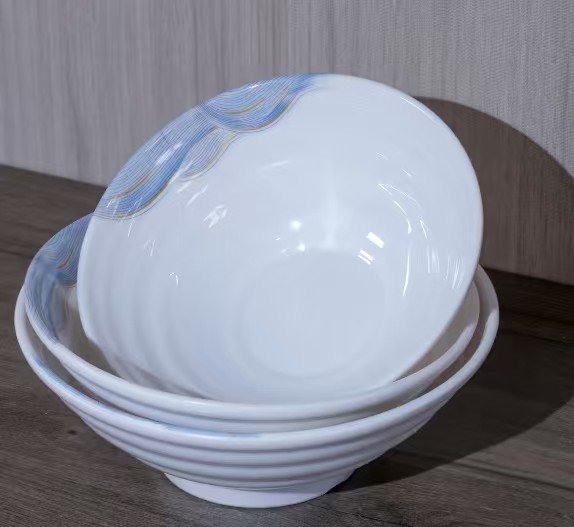
Compare the weight of several samples stacked together, not just one empty item. Check that the stack is stable, that staff can separate the pieces easily, and that the foot and rim do not catch. For bowls, the depth and nesting shape can make a noticeable difference to storage space.
Resistance to everyday knocks
Melamine can be useful where tableware is moved frequently, including casual dining and outdoor service. It is not unbreakable. Edges, corners and feet still need inspection, and damaged pieces should be removed from service. When comparing replacement costs, use your own breakage records and sample results rather than a supplier’s general durability claim.

A coordinated range without identical pieces
A restaurant might want a quiet border and a small logo, while a retailer may want several full-surface prints on one shape. We can discuss custom artwork on existing models as well as projects that need a new mold. Keep the food area, rim and underside markings in mind when preparing artwork.
For restaurant buyers, it is worth checking the sample in the lighting where it will be used. Color, gloss and the visual size of a logo can look different from the artwork on a screen.

What Are Its Main Use and Care Limits?
Melamine dinnerware is serving ware, not cookware. Microwave heating, oven use and direct heat are outside its intended role. Food-contact conditions also matter: temperature, contact time and food type should be considered together rather than reduced to one maximum-temperature number.
The FDA advises against heating food and drinks on melamine tableware in microwave ovens and discusses increased migration under high-temperature acidic conditions. Germany’s BfR takes a more cautious position on hot food contact, recommending that melamine-formaldehyde tableware should not be used with hot food. These are different scopes of advice, not a blanket international approval for every serving condition.
| Situation | Practical guidance | What to check |
|---|---|---|
| Cold or room-temperature serving | Use food-contact tableware within its specified conditions. | Applicable product documents, food type and contact time. |
| Hot food or drinks | Do not infer suitability from A5 labeling or a maximum heat-resistance figure. | Product use limits and guidance for your market; consider other suitable materials for hot service. |
| Microwave, oven, stovetop or direct flame | Do not use melamine dinnerware for heating or cooking. | Use cookware specifically intended for the appliance. |
| Dishwasher cleaning | Follow the model’s instructions. Duramela specifies its melamine dinnerware as dishwasher-safe. | Cycle, detergent and drying conditions, especially for commercial equipment. |
| Cutting and scrubbing | Avoid abrasive pads and harsh scraping; do not use the plate as a chopping board. | Scratches, chips, cracks or significant surface deterioration. |
Duramela’s stated maximum heat resistance for its melamine tableware is 120°C (248°F). This is a manufacturer specification, not permission to microwave the product or a claim that every food can remain in contact at that temperature. Food-contact conditions and the selected model’s instructions still apply.
Stains, wear and when to replace a piece
Rinse food residues promptly and follow the recommended cleaning routine. Strongly colored foods and drinks can leave marks, while abrasive cleaning can dull a surface. A worn print is a reason to inspect the piece and review how it has been used; it does not, by itself, identify the resin grade or prove a particular manufacturing fault.
Remove cracked, chipped or substantially deteriorated pieces from food service. For more detail, see our guides to melamine plate safety, microwave use and dishwasher care.
What Do A5 and “100% Melamine” Actually Tell You?
These descriptions are useful starting points for a material discussion, but they are not universal safety certificates. We specify A5 melamine for our melamine dinnerware. When reviewing an order, the next step is to match that description with the actual product, destination market and intended use.
Do not assume a fixed composition for every product sold under an A1, A3 or A5 label. Ask the supplier to identify the material in writing. Weight, sound, surface gloss and price cannot reliably authenticate the resin or demonstrate compliance.
| Information offered | What it helps establish | What it does not establish on its own |
|---|---|---|
| A5 or “100% melamine” description | The supplier’s declared material category. | A complete formulation, test result or approval for every food and temperature. |
| Underside markings | Product identification and stated care instructions, where provided. | Independent confirmation of all material or safety claims. |
| Food-contact test report | Results for the identified sample, substances and test conditions. | Automatic coverage of every other model, material, print or use. |
| Declaration of compliance and supporting documents | Declared compliance scope, restrictions and traceability information, as applicable. | A substitute for matching the documentation to your order and market. |
| Physical sample | Shape, dimensions, print, finish, handling and fit with your equipment. | Proof of chemical composition or migration performance based on appearance. |
For EU supply, the European Commission’s food-contact materials guidance explains the framework requirements. Ask for documentation relevant to the finished article and the applicable plastics requirements. “FDA,” “EU” or “LFGB” in a sales description is not enough to understand what was actually assessed.
We have food-contact reports available for our products. Tell us the model and destination country so we can identify the relevant documents for review. Check the sample description, report date, test conditions and results, rather than only the logo on the first page.
Is Bamboo-Fibre Dinnerware the Same Material?
No. A product made with bamboo powder and a plastic resin is a composite; it is not the same as a piece made from solid bamboo. Nor should a report for ordinary melamine be assumed to cover a bamboo-filled product. The word “bamboo” tells you too little without a material description.
The European Commission’s action on bamboo-containing plastic food-contact articles addresses bamboo and other unauthorized plant-based additives in plastics. A plant-based ingredient does not make the resulting plastic article automatically permitted, biodegradable or compostable.
This is particularly important when comparing supplier samples that look alike. Keep ordinary melamine, bamboo-plastic composites and solid bamboo as separate material specifications. Our bamboo melamine guide covers the distinction and market considerations in more detail.
What Should You Check Before Ordering?
Start with the job the tableware must do. A restaurant replacing service plates, a retailer testing printed designs and a brand ordering gift sets need different specifications. A model number or clear reference photo is more useful than asking for “the best melamine.”
| Check | Information to provide or request | Why it matters |
|---|---|---|
| Product and dimensions | Model, outside dimensions, usable area, depth, capacity and piece weight. | Similar-looking pieces may handle and serve differently. |
| Food and service routine | Food type, serving temperature, contact time and cleaning equipment. | Material choice must suit the actual use. |
| Material and documents | Declared material, destination country and applicable food-contact documents. | Helps match the evidence to the product and market. |
| Artwork and quantity | Logo or print files, placement and quantity for each model and design. | Determines setup, sampling and the order split. |
| Sample approval | Agree the shape, color, print position, finish and acceptance points. | Creates a clear reference before production. |
| Delivery and repeat orders | Packaging, destination, required date, shipping scope and reorder needs. | Lets you compare a complete offer and plan replenishment. |
Custom printing and repeat orders
At Duramela, a standard 3,000-piece plate order of the same model can be split into three prints of 1,000 pieces each. This can help a buyer compare designs without ordering 3,000 of every print. Smaller projects are discussed individually; 500-piece orders are special cases, not our standard minimum. Confirm quantities separately for cups, bowls and trays rather than applying the plate example to every product.
We keep approved artwork on file for repeat orders. Still confirm the model, print version, quantity and current delivery requirements when reordering. For a new shape, ask whether an existing mold can meet the need before committing to a new mold.
Once you have narrowed down the range, request the sample cost, timing and delivery terms in writing. For our standard custom sampling, the usual preparation time is about one week; regular bulk production is around three weeks from receipt of the deposit, with the design and sample or visual approval completed before production. Shipping time is additional.
Choosing a range for your restaurant or retail collection? Send the models or reference photos, quantities by design, destination country and intended use. We can discuss suitable samples, customization and the documents relevant to your order.
Discuss Samples and SpecificationsFrequently Asked Questions
Is melamine ceramic, or a coating on ceramic?
Melamine dinnerware has a molded plastic body. Its finish may resemble ceramic, but it is not a fired clay plate with a melamine coating. When a listing is unclear, request the material specification for the body as well as any decoration or other components.
Can I identify melamine by tapping a plate or checking its weight?
No reliable material conclusion follows from those checks alone. Thickness, size and construction all affect weight and sound. Use markings and supplier documents to identify the product; use a sample to judge whether it is comfortable and practical.
Does BPA-free mean a piece is suitable for every food use?
No. A BPA-free claim addresses one substance; it does not tell you the product’s microwave suitability, migration performance or intended contact conditions. Review the complete product information rather than treating one claim as an all-purpose safety approval.
Is melamine a good choice for children?
Resistance to breakage can be useful, but it does not settle the whole choice. Select a product intended for the child’s age and use, check its food-contact and care information, and remove damaged pieces. For heating and hot-food use, choose an alternative specifically suitable for those conditions and follow the relevant health authority guidance.
Can worn melamine dinnerware go in household recycling?
Do not assume it can. Melamine resin cannot simply be melted down like many thermoplastics, and household collection rules differ. Check with your local waste service. Reusability is a useful characteristic, but it is not the same claim as recyclability or compostability.
Is a printed sample necessary if I already approved a digital design?
A digital layout helps check placement and artwork. A physical sample adds information about color, gloss, scale and how the print looks on the curved surface. Choose the approval method with those differences in mind, particularly for a new model or color-sensitive design.
