
Not every bowl shape works for every dish. A bowl that is too deep can hide pasta and make portions look smaller, while a bowl that is too shallow can let sauces, dressings, or broth spill toward the edge. Wide-rim melamine bowls solve a specific foodservice problem: they frame the food like a plate while containing sauces like a bowl.
Wide-rim melamine bowls work best for saucy pasta, fresh salads, moderate hot stews, rice bowls, and dry or sauced Asian noodles. The center well holds the food, while the wide rim creates clean visual space, helps control spills, and gives staff a clearer handling area during service.
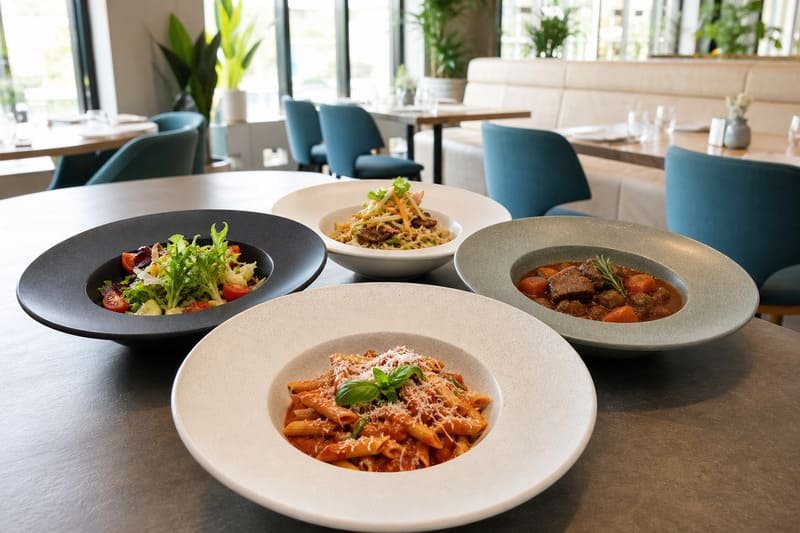
I have spent over ten years manufacturing melamine dinnerware in China. During this time, I have seen many restaurant owners, hotel buyers, and distributors choose bowl shapes based only on price or catalog photos. That often leads to the wrong result: pasta looks flat, salads spill over the side, or hot dishes are served in shapes that are not practical for staff.
When I review a wide-rim bowl sample, I do not look only at the diameter. I usually check five things before talking about price: rim width, center well depth, wall angle, foot ring stability, and decal position. These small design details decide whether the bowl works in a real commercial kitchen.
Quick Answer
| Dish Type | Does It Work Well in Wide-Rim Melamine Bowls? | Why |
|---|---|---|
| Saucy pasta | Yes | The center well holds sauce while the rim frames the portion |
| Fresh salad | Yes | The rim contains loose greens and creates color contrast |
| Hot stew | Yes, for serving only | Suitable for table service when used according to supplier instructions |
| Asian noodles | Yes, with correct depth | Holds broth or sauce while giving chopsticks room to move |
| Rice bowls | Yes | Keeps grains, toppings, and sauce centered |
| Steak entrées | Not ideal | Wide rim reduces cutting surface |
| Very large soup portions | Sometimes | A deeper bowl may be better when capacity matters more than presentation |
| Microwave-heated dishes | No | Melamine should not be used in microwaves or ovens |
Last Updated: May 24, 2026 | Estimated Reading Time: 8 minutes
By Lance, Marketing Director at Duramela
Why Do Wide-Rim Bowls Make Pasta Plating Look More Premium?
Flat pasta plates often let sauces run toward the edge, making the dish look messy before it reaches the customer. A bowl that is too deep can also make the portion look smaller than it really is.
Wide-rim melamine bowls make pasta look more premium by pooling sauce in the center well and leaving a clean rim around the food. The rim works like a visual frame, drawing attention to the pasta while helping staff serve the dish more neatly.
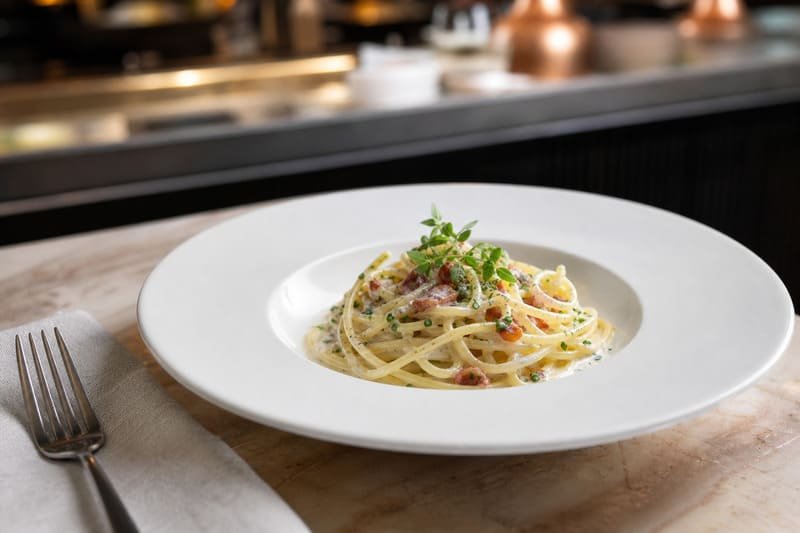
In my factory, I often help restaurant chains choose the right well depth for pasta bowls. A deep center well is important, but it should not be too extreme. If the well is too shallow, the pasta spreads out and the sauce moves too easily. If the well is too deep, the same portion can look small or buried.
For most pasta dishes, I recommend a medium well depth with a wide, flat rim. This shape gives enough space for sauce, garnish, and fork movement without making the dish look crowded.
The wide rim also acts as a cleaner handling zone. Servers can carry the bowl without touching sauced areas or leaving fingerprints near the food. This does not replace proper hygiene practices, but it helps staff avoid unnecessary contact with the eating area during busy service.
Here is how different pasta styles fit wide-rim bowls:
| Pasta Type | Sauce Consistency | Best Bowl Choice | Plating Result |
|---|---|---|---|
| Spaghetti Carbonara | Thick and creamy | Medium well, wide rim | Sauce stays centered and rim stays clean |
| Penne Arrabbiata | Chunky tomato sauce | Medium-to-deep well, wide rim | Holds sauce and reduces splashes |
| Seafood Linguine | Olive oil or light broth | Deeper well, wide rim | Catches juices and keeps shells contained |
| Pesto Pasta | Coated, lower liquid level | Medium well, light rim color | Highlights green color and garnish |
| Baked pasta portion | Structured, heavier | Low-to-medium well | Supports portion shape without hiding it |
When the bowl is made from properly cured A5 melamine and supported by food-contact test reports, it can offer a ceramic-like presentation with better impact resistance for commercial service. For buyers sourcing restaurant melamine tableware, this combination of presentation and durability is one of the main reasons wide-rim bowls remain popular.
Can Minimalist Bowls Improve Salad Freshness Perception?
Tossing fresh greens in a bowl that is too small causes ingredients to fall over the edge. Using a bowl with heavy inner patterns can also distract from the natural colors of the salad.
Minimalist wide-rim melamine bowls can improve salad freshness perception by creating a clean background. Matte white, cream, sand, or soft neutral colors make green leaves, tomatoes, cucumbers, grains, and fruit look brighter and more appetizing.
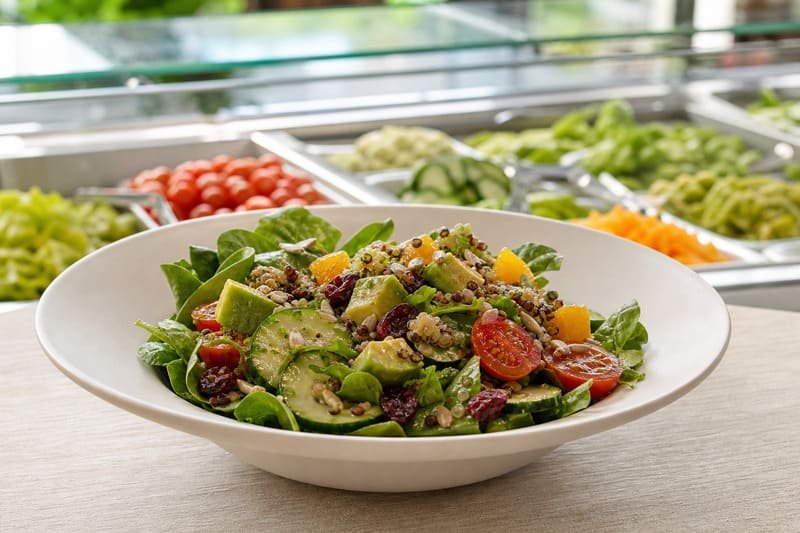
For salad bowls, the most expensive pattern is not always the best pattern. Sometimes the best design is the one that disappears behind the ingredients.
I often tell hotel and restaurant clients to avoid heavy artwork inside salad bowls unless the concept specifically needs it. Colorful decals can clash with tomatoes, greens, grains, cheese, and dressings. A clean matte white or warm cream finish often works better because it gives the food more contrast.
If the brand wants a logo, I usually recommend placing it on the flat rim or outer wall instead of the center well. This keeps the eating area cleaner and reduces the chance that the logo will be covered by dressing or ingredients.
Wide-rim bowls also help with tossing. The raised shape contains loose leaves when staff mix dressing before service, and it gives guests more room to adjust or mix the salad at the table.
Here is a practical color guide:
| Bowl Color | Recommended Salad | Visual Benefit | Brand Feel |
|---|---|---|---|
| Matte white | Caesar, Greek salad, house salad | Maximum ingredient contrast | Modern, clean, premium |
| Light sand / cream | Grain bowls, warm salads, organic menus | Softer natural look | Eco-style, calm, warm |
| Slate black | Fruit salads, seafood salads, fusion dishes | Highlights bright colors | High-end, dramatic |
| Soft green or blue-gray | Seasonal salads, wellness menus | Adds atmosphere without overpowering food | Fresh, lifestyle-focused |
| Patterned rim only | Branded salad programs | Adds identity while keeping food area clean | Custom but controlled |
A smooth glazed melamine surface can help resist staining, but restaurants should still avoid long soaking with acidic dressings, strong pigments, or oily sauces. Tomato-based sauces, curry, vinaigrettes, and beetroot can affect appearance if tableware is not cleaned promptly.
How Should Buyers Choose Rim Width and Well Depth?
A wide-rim bowl is not defined only by its outside diameter. Two bowls may both be called 10-inch wide-rim bowls, but one may work for pasta while the other works better for salad or stew.
Buyers should evaluate rim width, center well depth, wall angle, foot ring, and stacking performance before confirming a wide-rim bowl order. These details affect portion appearance, sauce control, staff handling, storage, and logo placement.
This is where many sourcing mistakes happen. Buyers approve a bowl because the top diameter looks correct, but they do not check how much usable space is in the center well. A very wide rim can look premium, but if the center well is too small, the portion may look tight. A larger well can hold more food, but if the rim is too narrow, the visual framing effect becomes weaker.
My 4-Point Wide-Rim Bowl Check
| Checkpoint | What I Look At | Why It Matters |
|---|---|---|
| Rim width | How much clean border remains after plating | Creates premium framing and gives staff a handling area |
| Center well depth | How much sauce, broth, or dressing the bowl can hold | Prevents overflow and controls portion appearance |
| Wall angle | Whether food slides outward or stays centered | Affects pasta, salad, noodles, and rice bowls |
| Logo area | Rim, outer wall, or bottom stamp | Protects branding from sauce, utensils, and heavy wear |
For pasta, the center well should be deep enough to hold sauce but open enough to show volume. For salad, the well should allow height and tossing space. For stew, the shape needs enough liquid capacity without becoming difficult to carry. For noodles, depth matters more because broth or sauce movement is part of the dish.
Size and Depth Guide
| Menu Use | Better Rim Width | Better Well Depth | Practical Note |
|---|---|---|---|
| Premium pasta | Medium-to-wide | Medium | Best balance of framing and sauce control |
| Tossed salad | Medium | Medium-to-deep | Needs volume and loose ingredient control |
| Stew or curry | Medium | Deeper | Needs more liquid capacity |
| Ramen or udon | Medium | Deep | Broth capacity matters more |
| Rice or grain bowl | Narrow-to-medium | Medium | Keeps toppings centered |
| Dessert bowl | Wide | Shallow-to-medium | Rim creates strong visual framing |
Before mass production, I recommend testing samples with real menu items. Do not approve only an empty bowl. Add the actual pasta, sauce, garnish, salad volume, or broth level. A bowl that looks perfect empty may feel too small, too deep, or too wide once food is plated.
How Do You Safely Serve Hot Stews in Melamine Dinnerware?
Serving hot dishes in the wrong way can damage tableware and create safety concerns. Melamine is useful for serving many foods, but it should not be treated like cookware.
Wide-rim melamine bowls can be suitable for serving hot stews, curries, and soups under normal table-service conditions, but they should not be used for cooking, microwaving, oven heating, direct flame, hot oil, or deep-fried foods straight from the fryer. Always follow supplier instructions and target-market food-contact requirements.
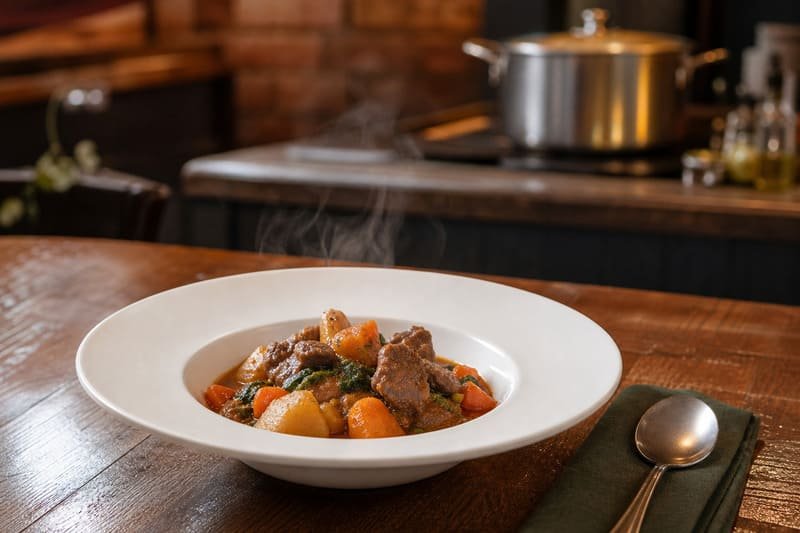
I must be very clear here: melamine is not a direct replacement for ceramic, stainless steel, or cast iron in high-heat cooking situations.
You should not use melamine bowls in:
- microwaves;
- ovens;
- steam ovens unless specifically approved by the supplier;
- open flame;
- stovetop cooking;
- broilers;
- direct contact with hot oil;
- cooking or reheating processes.
The U.S. FDA states that foods and drinks should not be heated on melamine-based dinnerware in microwave ovens and discusses concerns related to melamine migration under certain high-temperature and acidic conditions (FDA). The Centre for Food Safety in Hong Kong also advises that melamine-ware should be used according to manufacturer instructions and should not be used for cooking, microwave heating, conventional oven heating, hot oil, deep-fried foods, or storage of highly acidic foods (CFS).
For normal restaurant service, the correct process is simple:
- Cook the stew, curry, or soup in proper cookware.
- Transfer it into the melamine bowl for serving.
- Avoid microwave or oven reheating in the bowl.
- Avoid long storage of highly acidic foods.
- Replace bowls with cracks, chips, or heavy surface damage.
- Follow the supplier’s temperature guidance and test report.
The wide rim can provide a larger handling area for staff, but it should not be described as “always cool to touch.” Staff should still follow normal precautions for hot dishes, especially when serving stews, curries, ramen, or soups.
| Use Case | Recommended? | Notes |
|---|---|---|
| Serving hot stew after cooking in a pot | Yes, if supplier-approved | Suitable for normal table service |
| Microwaving stew in the bowl | No | Melamine should not be microwaved |
| Oven baking in the bowl | No | Not cookware |
| Serving hot oil or deep-fried food directly from fryer | No | Avoid hot oil and extreme heat exposure |
| Holding acidic soup for long storage | Not recommended | Use proper storage containers |
| Commercial dishwasher cleaning | Usually yes, if specified | Follow detergent and temperature guidance |
For B2B buyers, do not rely only on verbal claims. Ask for food-contact test reports and correct-use instructions for the exact product, color, and target market. FDA guidance on food-contact substances also emphasizes that food-contact safety depends on chemistry, intended use, and potential migration evaluation (FDA Guidance).
Does Rim Artwork Help or Hurt Asian Noodle Presentation?
Heavy, complex artwork on a noodle bowl can make a dish look crowded. But the right rim design can support a restaurant concept and make the bowl more memorable.
Rim artwork helps Asian noodle presentation when it matches the brand theme and does not fight with the food. Simple rims, dark solid colors, or controlled traditional patterns usually work better than busy full-bowl designs.
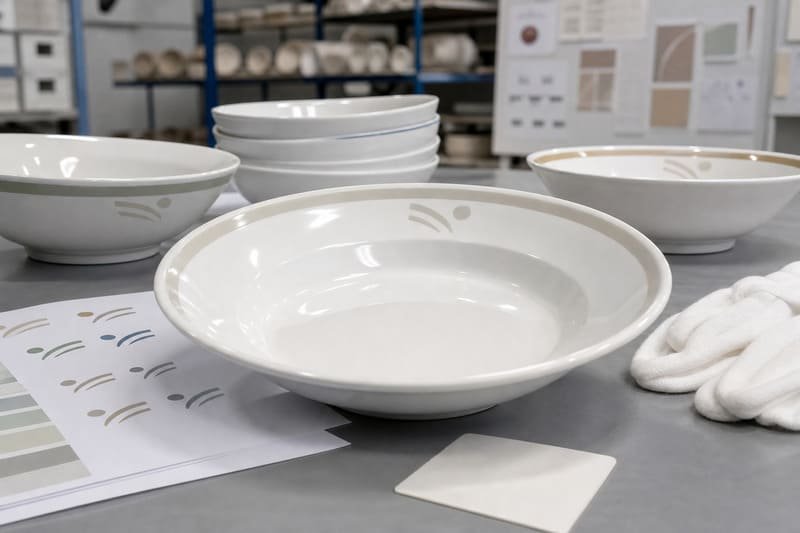
For Asian noodles such as ramen, udon, soba, dry noodles, and sauced noodles, the bowl needs to do more than look attractive. It must handle broth or sauce, allow chopstick movement, and keep toppings visible.
A wide-rim bowl can help control small splashes because the slope catches some broth movement before it reaches the table. However, for large-volume ramen or broth-heavy noodle dishes, depth is more important than rim width. If the bowl is too shallow, the dish may look good in photos but fail during service.
In my factory, we make both highly decorated bowls and minimalist bowls. I have noticed a clear pattern:
- traditional noodle shops often like stronger rim patterns;
- high-end fusion restaurants prefer matte black, gray, or stone-style finishes;
- fast-casual chains prefer simple solid colors with logo placement;
- hotel restaurants often prefer subtle patterns that match multiple cuisines.
Here is a practical design guide:
| Restaurant Concept | Recommended Design | Rim Art Style | Plating Focus |
|---|---|---|---|
| Traditional ramen bar | High contrast, bold colors | Red, black, or classic pattern | Authentic and energetic |
| Modern fusion Asian | Matte black, gray, or stone effect | Minimal or textured rim | Highlights toppings and broth |
| Fast-casual chain | Solid color with logo | Simple logo on outer rim | Brand recognition and clean service |
| Hotel buffet | Neutral color palette | Subtle rim detail | Works across multiple cuisines |
| Premium noodle concept | Dark exterior, light interior | Controlled rim accent | Creates contrast without clutter |
If you choose rim artwork, think about where chopsticks, spoons, stacking contact, and dishwasher pressure will affect the surface over time. A beautiful design is only useful if it remains attractive after repeated commercial use.
For broth-heavy noodles, confirm capacity, use temperature, and target-market food-contact compliance before placing a large order.
Which Custom Logo Method Helps Reduce Peeling and Wear?
Logos that fade or peel after a few wash cycles make a restaurant look unprofessional. For commercial use, the printing method matters as much as the artwork itself.
A glazed decal process usually provides better long-term durability than simple surface printing. The design is sealed under a protective melamine glaze layer during molding, which helps reduce peeling, scratching, and surface wear in commercial dishwashing conditions.
Many B2B buyers ask me why some custom logos peel off quickly while others last for years. The answer is usually the production method.
Simple screen printing can be cheaper, but it often sits closer to the surface of the finished bowl. Under repeated commercial washing, stacking, spoons, chopsticks, and cleaning chemicals, surface printing can wear faster.
For long-term restaurant use, I usually recommend a glazed decal process. In this process, the design is printed on special decal paper, positioned during production, and covered with a clear glazing layer. Under heat and pressure, the design becomes protected by the surface layer rather than sitting exposed on top.
This does not mean the logo is indestructible. Harsh chemicals, abrasive pads, metal scrapers, heavy stacking abuse, and years of daily use can still affect the surface. But compared with basic surface printing, glazed decals usually perform much better in commercial kitchens.
| Printing Method | Durability Level | Scratch Resistance | Best For | Cost |
|---|---|---|---|---|
| Simple screen printing | Low to medium | Lower | Short-term events, promotional use | Lower |
| Glazed decal paper | High | Higher | Daily restaurant use, hotel programs, branded bowls | Standard |
| Rim-only decal | High | Higher when placed well | Logos, borders, brand patterns | Standard |
| Outer-wall logo | High | Less food contact | Rice bowls, noodle bowls, hotel bowls | Standard |
For wide-rim bowls, the rim is a valuable branding area. It gives you space for a logo, pattern, or border without placing the design directly under the food. This is one reason many brands choose custom melamine bowls for restaurant and hotel programs.
Logo Placement Guide
| Bowl Use | Better Logo Placement | Why |
|---|---|---|
| Pasta bowl | Wide rim | Logo remains visible after plating |
| Salad bowl | Rim or outer wall | Less covered by greens and dressing |
| Ramen bowl | Outer wall or rim accent | Avoids visual clutter inside the broth area |
| Rice bowl | Outer wall | Visible when carried and served |
| Hotel buffet bowl | Subtle rim mark | Works across different cuisines |
| Private-label retail bowl | Rim plus bottom stamp | Supports both display and brand identification |
The safest design approach is simple: keep heavy artwork away from the highest contact zones and choose a printing method that matches the expected service life.
Which Dishes Should Not Use Wide-Rim Melamine Bowls?
A wide-rim bowl is useful, but it is not the best shape for every dish. Telling buyers what not to use it for is just as important as recommending the best applications.
Wide-rim melamine bowls are not ideal for knife-heavy entrées, very large soup portions, cooking, microwave heating, oven use, hot oil, or deep-fried foods served directly from the fryer. If cutting space, high heat, or maximum liquid capacity is the priority, choose another vessel.
Here are the main cases where I would choose a different shape:
| Dish or Use Case | Better Alternative | Why |
|---|---|---|
| Steak or knife-heavy entrée | Flat melamine plate or ceramic plate | Needs a stable cutting surface |
| Very large soup portion | Deep soup bowl | Capacity matters more than rim framing |
| Boiling-hot cookware service | Ceramic, stainless steel, or cast iron | Melamine is not cookware |
| Microwave-heated meals | Microwave-safe container | Melamine should not be microwaved |
| Hot oil or fryer-direct foods | Heat-rated cookware or ceramic | Avoid extreme heat and hot oil |
| Tiny appetizers | Small plate or tasting dish | Wide rim may make portion look too small |
| Long acidic food storage | Proper storage container | Avoid long contact with highly acidic foods |
This section is important for trust. If a supplier says one bowl is perfect for every dish, I would be cautious. Good sourcing means matching the product to the real use case.
What Are the Most Common Questions Buyers Ask About Melamine Bowls?
More buyers usually care about more than appearance. They need to understand dishwasher use, MOQ, hot food limits, logo durability, and whether the bowl shape fits the menu before placing a bulk order.
The most common questions about wide-rim melamine bowls involve commercial dishwasher use, hot soup service, MOQ, custom colors, full-rim decals, and the difference between wide-rim bowls and deep bowls. Clear answers help buyers avoid wrong claims and wrong applications.
Can these bowls go in a commercial dishwasher?
Most commercial A5 melamine bowls are designed for dishwasher cleaning, but buyers should follow the supplier’s temperature and detergent guidance. Avoid abrasive pads, harsh bleach, metal scrapers, and continued use of bowls with cracks, chips, or heavy surface damage.
The FDA Food Code also emphasizes that foodservice equipment and utensils should be maintained, cleaned, and kept in good repair for safe operation (FDA Food Code).
What is the standard MOQ for custom colored wide-rim bowls?
Our factory standard MOQ is usually around 3,000 pieces per design or color. However, MOQ can change depending on mold availability, custom color requirements, decal coverage, packaging, and order schedule.
For new restaurant projects or hotel custom programs, we may sometimes support smaller trial orders if the buyer chooses an existing mold and a simpler decoration method.
Are wide-rim melamine bowls safe for hot soup and ramen?
They can be suitable for serving hot soup or ramen when used according to supplier instructions and supported by relevant food-contact test reports. However, do not heat food in melamine bowls in a microwave or oven. Also avoid using melamine for hot oil, deep-fried foods, direct flame, or long storage of highly acidic foods.
Can we print a full-surface pattern on the wide rim?
Yes, full-rim decals are possible. A glazed decal process can seal the design under a protective surface layer, making it more durable than simple surface printing. However, avoid placing heavy artwork in areas that receive the most spoon, chopstick, stacking, or cleaning contact.
What dishes should not be served in wide-rim melamine bowls?
Wide-rim bowls are not ideal for steak or knife-heavy entrées, very large soup portions, cooking, oven use, microwave heating, hot oil, or deep-fried foods served directly from the fryer. Use wide-rim bowls for presentation and controlled serving, not for high-heat cooking.
Is a wide-rim bowl better than a deep bowl?
A wide-rim bowl is better for presentation, sauce control, and premium framing. A deep bowl is better for large-volume soups, ramen broth, and dishes where capacity matters more than visual space. Many restaurants need both shapes in their tableware set.
Conclusion
Wide-rim melamine bowls are best for dishes that need both presentation and containment. They work especially well for saucy pasta, fresh salads, rice bowls, moderate stews, curries, and Asian noodles when the rim width and center well depth match the menu.
The key is not simply choosing a “wide-rim bowl.” Buyers should evaluate the rim width, center well, wall angle, logo placement, stacking performance, and correct-use instructions. A bowl that looks good in a catalog must still work with real food, real staff, and real dishwashing conditions.
For hot foods, remember the most important rule: melamine is for serving, not cooking or reheating. Do not use it in microwaves, ovens, direct flame, or hot oil applications. Always confirm supplier specifications and food-contact reports for your target market.
My practical advice is simple:
Use wide-rim melamine bowls when you want the food to look framed, controlled, and premium. Use a different shape when you need heavy cutting space, very high heat, or maximum liquid capacity.
