
Choosing the wrong tableware shape can lead to messy tables, slower service, poor portion presentation, and unhappy customers. In restaurant sourcing projects, I usually do not start with the catalog photo. I start with the menu.
For commercial menus, the best melamine shape is determined less by style and more by food behavior: sauce level, ingredient looseness, cutting needs, and service speed. Flat melamine plates work best for dry, structured entrées, while shallow bowls, wide-rim bowls, and deep plates are often better for pasta, salads, rice bowls, and saucy dishes.
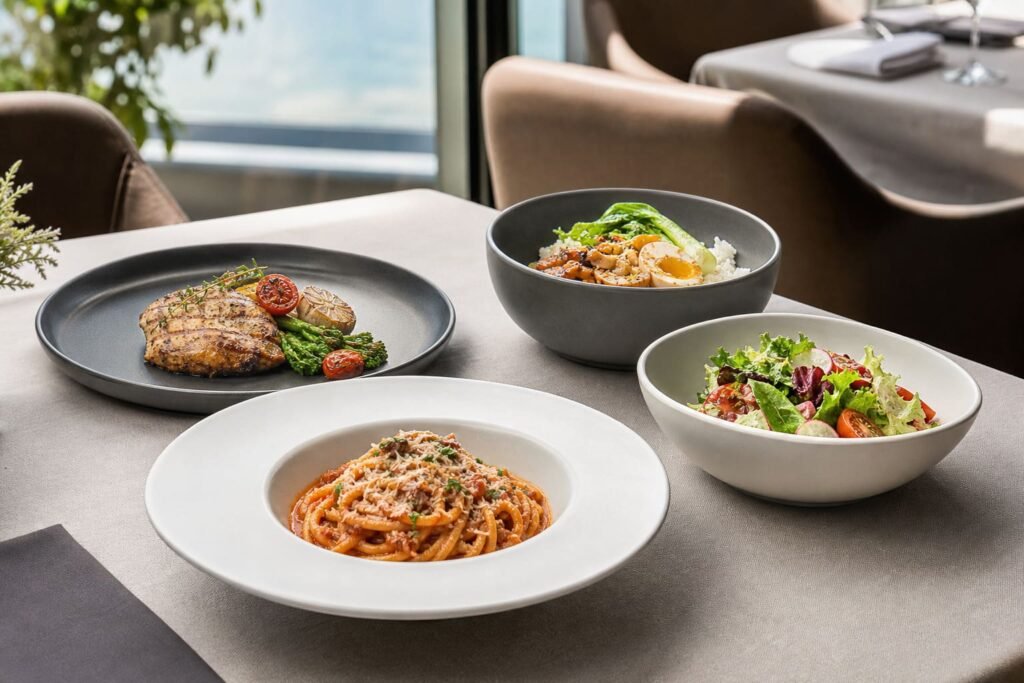
Many buyers pick plates or bowls based on a quick look at a catalog or a simple gut feeling. That is where problems begin. A plate that looks beautiful when empty may not work well with a saucy pasta. A bowl that looks premium in a showroom may stack poorly in a busy restaurant kitchen.
I have seen restaurants order too many flat plates because they seem versatile and affordable. Then, when the menu expands into pasta, salads, noodle bowls, or grain bowls, the kitchen has to improvise with the wrong shapes. The result is often messy plating, slower service, and inconsistent guest experience.
This guide will help you match melamine plates and bowls to real menu items before placing a bulk order.
Quick Answer for Restaurant Buyers
| Menu Item | Better Melamine Shape | Why It Works |
|---|---|---|
| Saucy pasta | Wide-rim shallow bowl | Holds sauce and supports fork movement |
| Tossed salad | Deep coupé plate or shallow bowl | Keeps greens and dressing contained |
| Rice bowl | Medium deep bowl | Holds grains, toppings, and sauce together |
| Noodle soup | Deep bowl | Contains liquid and keeps portion structure |
| Steak or dry entrée | Flat dinner plate | Gives enough cutting space |
| Shared appetizer | Low-rim plate or platter | Allows easy access from multiple sides |
| Breakfast set | Flat plate with small side bowl | Separates dry and wet items |
Last Updated: May 22, 2026 | Estimated Reading Time: 8 minutes
By Lance, Marketing Director at Duramela
How Do Food Structure and Rim Height Change Your Choice?
Serving runny sauces on flat plates causes spills, slows down servers, and makes the guest experience less comfortable. Rim height is one of the fastest ways to solve this problem.
Rim height determines how well tableware handles sauces, loose ingredients, and mixed dishes. Flat plates are best for structured foods that need cutting space. Shallow bowls and deep plates are better for pasta, salads, rice dishes, and foods with sauce or dressing.
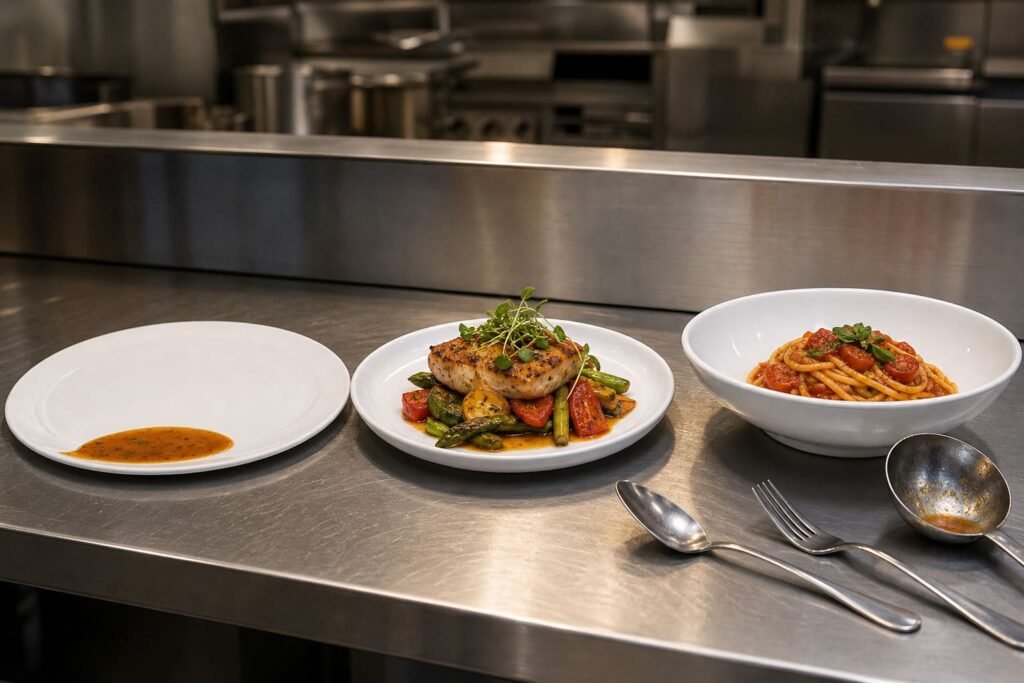
I have noticed that many restaurant buyers make the mistake of choosing standard flat plates for almost everything. This works for steak, grilled fish, sandwiches, or plated entrées. But it does not work as well for foods that move.
When you serve saucy pasta or a dressed salad on a completely flat surface, sauce and dressing can run toward the edge. Loose ingredients may fall off the plate when servers carry multiple dishes. Guests may also find it harder to scoop, mix, or twirl food neatly.
A shallow bowl with a wide rim gives you the visual style of a plate but adds the functional control of a bowl. This is why wide-rim pasta bowls, coupé plates, and shallow bowls are so useful in modern restaurant menus.
The Role of Rim Height in Menu Application
By looking at the structure of your food, you can choose tableware that matches how the food behaves during plating, carrying, and eating.
| Food Type | Food Behavior | Best Tableware Shape | Why It Works Better |
|---|---|---|---|
| Pasta with sauce | High sauce level, needs twirling | Wide-rim shallow bowl | Keeps sauce centered and gives guests a wall for fork movement |
| Tossed salad | High volume, loose leaves, dressing | Deep coupé plate or shallow bowl | Prevents greens and dressing from spilling |
| Rice bowls | Grains, toppings, sauce | Medium deep bowl | Holds loose grains together and supports spoon use |
| Noodle soup | Liquid, noodles, toppings | Deep bowl | Contains broth and keeps ingredients structured |
| Dry entrées | Structured food, needs cutting | Flat dinner plate | Provides stable cutting space for knives and forks |
| Shared appetizers | Finger food or dry snacks | Low-rim plate or platter | Easy access from different sides of the table |
| Desserts | Sauce, cream, garnish | Small rimmed plate or shallow bowl | Controls sauce while keeping presentation open |
Even a small increase in rim height, sometimes only 1–2 cm, can make a big difference for saucy or loose foods. This small structural change helps reduce spills, improve portion presentation, and make service easier for staff.
My Menu-to-Shape Selection Method
When I help buyers review melamine shapes, I use a simple menu-to-shape method.
| Step | What to Check | Shape Decision |
|---|---|---|
| 1 | Is the dish dry or saucy? | Saucy dishes need raised rims or shallow bowls |
| 2 | Does the guest need to cut with a knife? | Cutting needs a flatter surface |
| 3 | Are ingredients loose or mixed? | Loose ingredients need deeper walls |
| 4 | Is the dish plated or tossed? | Tossed foods need better containment |
| 5 | How fast is service? | Choose stackable, easy-carry shapes |
| 6 | Will the dish be photographed? | Choose a shape that frames the portion well |
In our sample review process, I often ask buyers to test the plate with the actual dish, not just approve the shape from a photo. A 10-inch flat plate and a 10-inch shallow bowl may have the same diameter, but they present portion size very differently once sauce, garnish, and fork movement are considered.
Which Shape Works Best for Pasta, Salad, Rice, and Entrées?
Many buyers ask whether they should order more plates or more bowls. The better question is: what does your menu actually need to do during service?
Pasta usually needs sauce control, salad needs volume control, rice bowls need ingredient containment, and entrées need cutting space. Matching the shape to the eating behavior of each dish helps improve presentation and reduce service problems.
For restaurants, hotels, catering companies, and distributors, the most useful melamine collection is rarely made of only one shape. A strong commercial set usually combines flat plates, shallow bowls, deep bowls, and serving pieces.
Pasta
Saucy pasta works better in wide-rim shallow bowls because the rim helps keep sauce in the center. Guests can also use the side wall to twirl pasta more comfortably.
Flat plates can still work for dry pasta presentations, tasting menus, or dishes where the chef wants a more open plated style. But for daily restaurant service, especially with tomato sauce, cream sauce, or oil-based pasta, shallow bowls are usually more practical.
Salad
Tossed salads need height and volume. If the plate is too flat, leaves and toppings fall over the edge. If the bowl is too deep, the salad may look smaller than it really is.
A deep coupé plate or shallow salad bowl is often the best compromise. It gives enough height for volume while keeping the top open for presentation.
Rice Bowls
Rice bowls, poke bowls, grain bowls, and Asian fusion dishes need containment. Grains and toppings should stay together, and guests should be able to scoop easily.
A medium deep bowl usually works better than a flat plate because it keeps rice, sauce, and toppings organized. For takeout-style presentation or casual dining, deeper bowls also help create a generous portion impression.
Entrées
Steak, grilled fish, sandwiches, breakfast plates, and structured entrées usually need flat space. Guests need room to cut with a knife, and chefs need room to place side dishes neatly.
For these foods, flat or low-rim plates remain the best choice. A bowl may look stylish, but it can make cutting difficult and reduce usable surface area.
| Dish Category | Best Shape | Avoid |
|---|---|---|
| Saucy pasta | Wide-rim shallow bowl | Very flat plate with no rim |
| Tossed salad | Deep coupé plate or shallow bowl | Small flat plate |
| Rice or grain bowl | Medium deep bowl | Oversized flat plate |
| Steak or grilled entrée | Flat dinner plate | Deep bowl |
| Soup or noodles | Deep bowl | Shallow plate |
| Shared snacks | Platter or low-rim plate | Deep individual bowl |
| Dessert with sauce | Small rimmed plate | Completely flat plate |
For buyers building a full restaurant line, I recommend combining commercial melamine plates with matching bowls, instead of choosing only one shape family.
Why Do Weight, Thickness, and Durability Matter More Than Unit Price?
Buying cheap, thin tableware may reduce the first quotation, but it can increase replacement costs later. In commercial use, the lowest unit price is not always the lowest total cost.
Thicker, well-cured commercial melamine usually performs better than very thin pieces, but durability also depends on resin quality, molding control, edge design, glaze quality, and daily handling. Buyers should compare long-term service life, not only unit price.
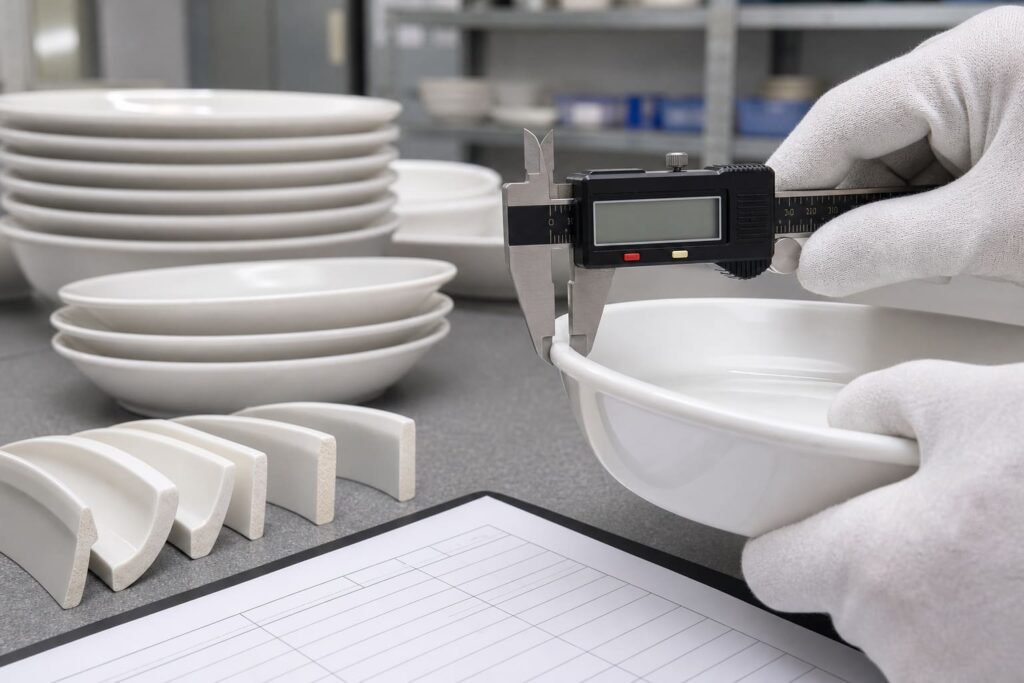
In my work with supply chains, I see many buyers look only at the unit price on a quotation sheet. This can be misleading. A lightweight plate may look similar to a heavy-duty commercial plate in a catalog photo, but it may feel very different in the hand and perform differently in a restaurant.
Thin or poorly cured melamine is more likely to show edge damage, surface wear, staining, or cracking under high-volume dishwashing, stacking, and service conditions. Heavy-duty melamine is not only about thickness; it is also about material grade, molding pressure, curing time, edge strength, and finishing control.
Melamine is widely used in foodservice because it is lightweight compared with ceramic and highly resistant to breakage. However, it is not unbreakable. It should still be handled properly and replaced if cracked, heavily scratched, or damaged.
The True Cost of Lightweight Tableware
To find the real value of your purchase, you need to look beyond the quotation line.
| Quality Grade | Typical Wall Thickness | Weight Feel | Commercial Lifespan | Typical Use Case |
|---|---|---|---|---|
| Standard / Thin | Around 2.0–2.5 mm | Very light | Shorter under heavy use | Fast food, casual food courts, low-budget projects |
| Commercial / Heavy | Around 3.0–4.5 mm | More substantial | Longer with proper handling | Busy restaurants, hotels, catering, buffet service |
| Premium Heavy-Duty | Varies by design | Ceramic-like feel | Stronger long-term performance | Hotels, branded restaurants, premium casual dining |
A heavier piece can feel more premium and may keep the food experience more stable during short service compared with very thin lightweight pieces. However, heat retention also depends on food temperature, kitchen workflow, serving time, and the shape of the item.
Stacking and Storage Efficiency
Another factor I always check is stacking.
Thick-walled melamine bowls may take up more vertical storage space than flat plates. Deep bowls can also create storage pressure if the restaurant has limited shelving. However, well-designed plates and bowls with stable foot rims stack more securely and are easier for staff to handle.
For hotels and chain restaurants, I also check how many pieces can fit into one dish rack, one shelf, and one service station. A beautiful bowl that cannot stack efficiently may create problems during peak service.
| Operational Factor | Why It Matters |
|---|---|
| Stack height | Affects shelf space and storage planning |
| Foot rim design | Helps pieces stack securely |
| Weight per piece | Affects carrying comfort and shipping cost |
| Edge thickness | Influences chip resistance and guest perception |
| Dishwasher rack fit | Impacts cleaning efficiency |
| Surface finish | Affects stain resistance and long-term appearance |
If you are buying for a chain restaurant, hotel group, or distributor, test stacking and handling before approving mass production.
How Do You Balance Your Plate-to-Bowl SKU Ratio for Better Service?
Ordering too many flat plates can leave the kitchen struggling to serve salads, soups, pasta, and rice bowls during rush hours. The right SKU mix should follow your menu mix.
A balanced commercial tableware inventory often includes both plates and bowls, but the ideal ratio depends on menu style. Pasta, salad, rice, noodle, and bowl-focused menus usually need a higher bowl ratio than traditional steak or Western entrée menus.
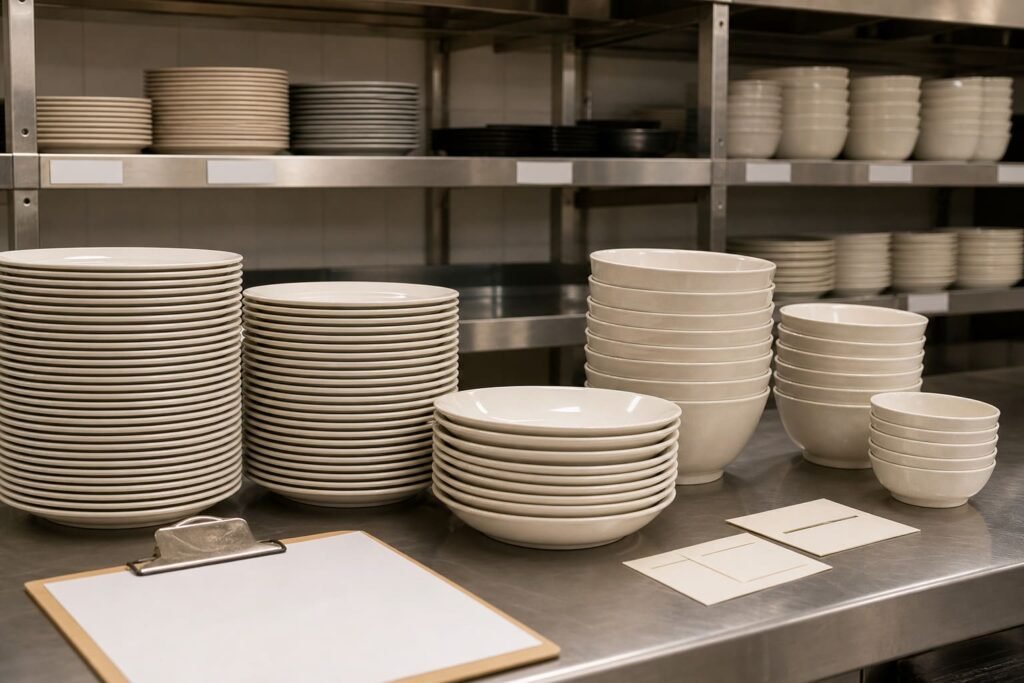
A common issue I see in product selection is a lack of inventory balance. A restaurant owner may order 90% flat dinner plates because they are affordable and seem versatile. Later, when the menu includes pasta, salads, rice bowls, or soups, the kitchen does not have enough suitable vessels.
Servers then use oversized bowls, undersized plates, or shapes that make the portion look wrong. This affects presentation, speed, and customer satisfaction.
Planning Your Tableware Inventory
When I consult with wholesale buyers and restaurant operators, I ask them to break down their menu before placing an order:
- List your top-selling dishes.
- Mark each dish as dry, saucy, loose, or liquid.
- Count how many dishes require cutting space.
- Count how many dishes require containment.
- Match the tableware ratio to menu volume.
- Test samples with real food before final approval.
| Menu Focus | Recommended Plate % | Recommended Bowl / Deep Plate % | Ideal Key SKU to Add |
|---|---|---|---|
| Pasta & salad heavy | 30–40% | 60–70% | Wide-rim pasta bowls, deep salad coupé plates |
| Traditional Western / steak | 65–75% | 25–35% | Flat dinner plates, small side bowls |
| Asian fusion / rice & noodle | 35–45% | 55–65% | Deep noodle bowls, medium rice bowls |
| General bistro / mixed menu | 50–60% | 40–50% | Rimmed soup/pasta plates, standard dinner plates |
| Buffet / hotel breakfast | 55–65% | 35–45% | Flat plates, cereal bowls, fruit bowls |
| Catering / events | 60–70% | 30–40% | Stackable plates, compact bowls |
There is no perfect universal ratio. But for many modern menus, a 60/40 or 50/50 plate-to-bowl mix is more practical than an inventory dominated by flat plates.
Protecting Your Brand with Smart Customization
If you plan to add logos or custom patterns to your melamine, the plate-to-bowl ratio matters even more.
Logos printed in the center of a flat dinner plate may be exposed to heavy knife contact, especially with steak, grilled meats, and Western entrées. Over time, this can affect the visual appearance of the branding. For this reason, I usually avoid placing large logos in the center of flat plates used with knives.
For bowls, shallow bowls, and rimmed plates, the rim or outer wall is often a better branding area. It keeps the logo visible and reduces direct contact with knife marks.
| Use Case | Better Logo Placement | Why |
|---|---|---|
| Steak plate | Rim, back stamp, or subtle edge mark | Avoids heavy knife marks in the center |
| Pasta bowl | Wide rim | Logo stays visible after plating |
| Rice bowl | Outer wall or inner upper wall | Visible when carried and served |
| Salad bowl | Rim or outside wall | Less covered by greens and dressing |
| Buffet plate | Rim or small side mark | Reduces wear from utensils |
| Hotel breakfast bowl | Outer wall | Visible in stacked and served positions |
This is where custom melamine bowls can be especially useful for restaurant branding. A bowl gives you more logo placement options than a flat plate, especially when the menu includes pasta, rice, noodles, or salad.
What Are the Most Common Sourcing Questions About Melamine Plates and Bowls?
Sourcing mistakes can lead to tableware that performs poorly, fails to match the menu, or does not meet the buyer’s safety expectations. These are the questions I usually check before approving a bulk order.
Commercial melamine plates and bowls should be evaluated by shape, weight, wall thickness, stacking performance, food-contact compliance, and correct-use instructions. Melamine is suitable for serving many foods, but it should not be used in microwaves, ovens, or direct flame.
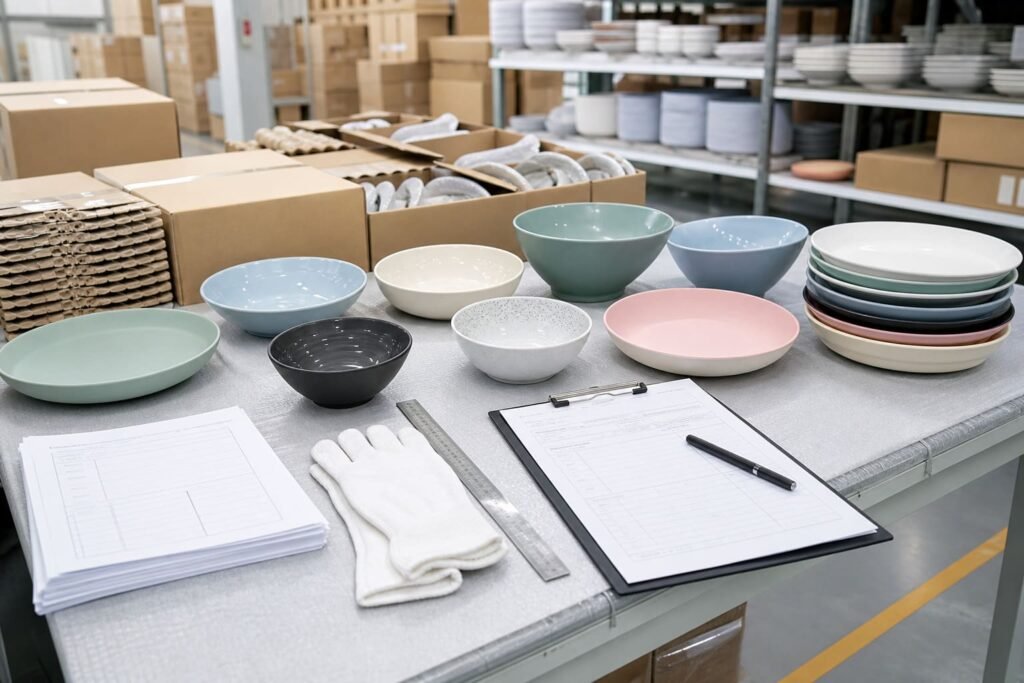
When I work with global importers and hospitality sourcing managers, I answer many technical questions about product safety and durability. Not all melamine is created equal. Raw material quality, molding pressure, curing time, finishing, and inspection all affect the final performance.
For food-contact safety, buyers should rely on target-market compliance documents and correct-use guidance. The U.S. FDA states that foods and drinks should not be heated on melamine-based dinnerware in microwave ovens, and it also discusses migration concerns under certain high-temperature and acidic conditions (FDA).
FDA has also published broader safety assessment information on melamine and related compounds in food contexts through its risk assessment documentation (Federal Register). For food-contact materials generally, buyers should understand that compliance depends on chemistry, intended use, and migration evaluation, as reflected in FDA guidance on food-contact substance submissions (FDA Guidance).
For restaurant operations, cleaning, sanitation, and maintenance also matter. The FDA Food Code provides foodservice guidance related to equipment, utensils, cleaning, and safe operation practices (FDA Food Code).
Common Buyer Questions I Check Before Bulk Orders
Is commercial melamine microwave safe?
No. Melamine plates and bowls should not be used in microwaves or ovens. The FDA advises that foods and drinks should not be heated on melamine-based dinnerware in microwave ovens. Heat the food in microwave-safe cookware first, then serve it on melamine.
What temperature range can melamine handle?
The usable temperature range depends on the exact product and supplier specification. Many commercial melamine products are designed for cold service, hot food service, and dishwasher cleaning, but buyers should confirm the exact range on the product specification sheet and test report.
For many A5 commercial melamine items, suppliers commonly specify a working range around -20°C to +120°C, but this must be confirmed for the selected item, production batch, and target market. Do not use melamine in microwaves, ovens, or direct flame.
How can I spot low-quality melamine?
Low-quality melamine often feels very light and thin. It may have rough edges, uneven gloss, poor stacking, visible dark specks, surface waviness, or an unclear material grade.
High-quality commercial melamine usually has a more solid weight, smoother edges, stronger wall thickness, and a clean surface finish. If the supplier cannot provide material details or food-contact test reports for your target market, treat that as a red flag.
Which is better for pasta, a plate or a bowl?
For saucy pasta, a wide-rim shallow bowl is usually better than a flat plate because it keeps sauce contained and gives guests a rim for fork movement. For dry pasta portions, tasting menus, or modern plated presentations, a flat or low-rim plate can still work.
What plate-to-bowl ratio should a restaurant order?
There is no fixed ratio, but many mixed menus work better with 50–60% plates and 40–50% bowls or deep plates. Pasta, salad, rice, noodle, and bowl-focused menus usually need a higher bowl ratio.
Where should I place a custom logo on melamine plates or bowls?
For flat plates used with knives, avoid large logos in the center. Rim printing or outer-wall logos on bowls often stay more visible because they are less exposed to cutting marks and heavy food oils.
Is melamine dishwasher safe?
Many commercial melamine items are marketed as dishwasher safe, but buyers should follow the supplier’s specification. Avoid harsh chemicals, abrasive pads, and using damaged items. If the surface becomes cracked, heavily scratched, or chipped, the item should be replaced.
| Sourcing Question | Material Standard | Best Practice |
|---|---|---|
| Is it dishwasher safe? | Depends on product specification | Confirm supplier guidance and avoid harsh chemicals |
| Can it go in the microwave? | No | Heat food separately, then serve on melamine |
| Can it chip or break? | Shatter-resistant but not unbreakable | Avoid drops, impacts, and metal abuse |
| Where should a logo go? | Rim or outer wall often works best | Keep branding away from heavy knife marks |
| What reports should I ask for? | Target-market food-contact reports | Make sure reports match the exact product |
| What should I test before bulk order? | Shape, weight, stacking, washing, menu fit | Use real menu items during sample approval |
Understanding these basic guidelines helps buyers avoid common sourcing mistakes. When you buy restaurant melamine tableware direct from a knowledgeable factory, you can review shapes, samples, test reports, logo placement, and packaging instructions before mass production.
Conclusion
Choosing between melamine plates and melamine bowls is not only a design decision. It is an operational decision.
Flat plates work best for dry, structured entrées that need cutting space. Shallow bowls and wide-rim bowls work better for saucy pasta, tossed salads, rice bowls, and loose ingredients. Deep bowls are essential for soups, noodles, and liquid-heavy dishes.
For commercial buyers, the best approach is to start with the menu, not the catalog. Review food behavior, sauce level, portion size, service speed, stacking space, and branding position before confirming your SKU mix.
My practical advice is simple:
Test real menu items on real samples before bulk ordering. The right melamine shape should make the dish look better, help staff serve faster, and reduce long-term replacement problems.
