
You want sustainable tableware, and bamboo seems like the perfect answer. But the market is filled with confusing claims, leaving many buyers unsure whether “bamboo” products are truly natural, safe, and suitable for commercial use.
Bamboo tableware can be a good choice, but only when you understand what type of bamboo product you are buying. Solid bamboo tableware is closer to a wood product made from laminated bamboo strips, while bamboo fiber tableware is usually a composite made from bamboo powder or bamboo fiber mixed with a resin binder, often melamine-formaldehyde resin. Their safety, durability, and sustainability should be evaluated separately.
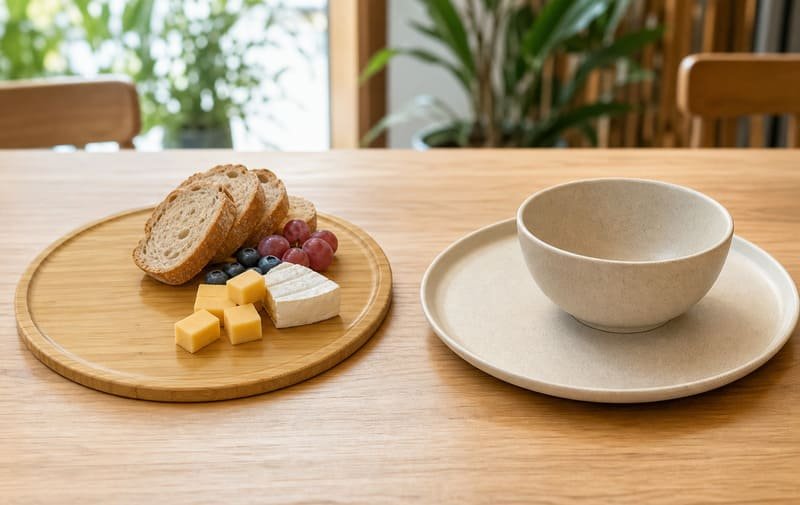
In my years of helping clients source tableware, the confusion around “bamboo” comes up almost daily. A restaurant owner in Europe may ask for a natural-looking serving board, while a retail brand in the US may want a colorful, “plant-based” kids’ dinner set. Both use the word “bamboo,” but they are often talking about two completely different products.
In factory discussions, I usually separate bamboo projects into two files from the beginning: solid bamboo projects and molded bamboo fiber composite projects. The material confirmation, sample approval process, testing documents, customization options, and even packing method can be different. If a buyer only says, “I want bamboo tableware,” my first question is always:
“Do you mean natural laminated bamboo, or bamboo fiber mixed with resin?”
Understanding this difference is the first step to making a safe, responsible, and commercially practical purchasing decision.
Quick Answer for Buyers
| Question | Short Answer |
|---|---|
| Is bamboo tableware always natural? | No. Solid bamboo is wood-based, while bamboo fiber tableware is usually a resin composite. |
| Is bamboo fiber tableware plastic-free? | Usually no. Most bamboo fiber dinnerware needs a resin binder, often melamine-formaldehyde resin. |
| Is solid bamboo dishwasher safe? | Usually no. It is better for dry serving, light use, and hand washing. |
| Is bamboo fiber allowed in every market? | No. Buyers must check target-market regulations, especially in the EU. |
| Is “eco-friendly” equal to food safe? | No. Food-contact safety depends on adhesives, coatings, resin quality, migration testing, and correct use. |
| What should buyers ask suppliers for? | Material composition, food-contact test reports, coating or resin details, and correct-use instructions. |
Last Updated: May 18, 2026 | Estimated Reading Time: 8 minutes
By Lance, Marketing Director at Duramela
What’s the Real Difference Between Pure Bamboo and Bamboo Fiber Tableware?
You see “bamboo tableware” advertised everywhere, but some products look like wood while others feel like plastic. This is not just a style difference; it reflects a fundamental difference in material and manufacturing.
Solid bamboo tableware is made from laminated strips of bamboo. Bamboo fiber tableware, however, is a molded composite made by mixing bamboo powder or bamboo fiber with a binding resin. One is closer to a wood product, while the other is closer to a plastic composite using bamboo as a filler.
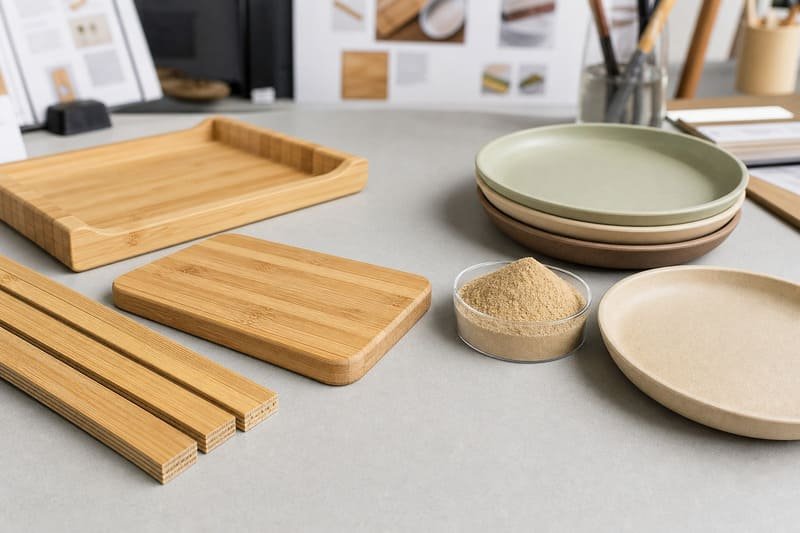
This distinction is the single most important thing to understand before sourcing. I have seen buyers get this wrong, and it can lead to problems with product performance, food-contact compliance, customs inspection, and even brand reputation.
Solid bamboo and bamboo fiber products serve different purposes. They have different strengths, different safety checkpoints, and different sustainability claims. A solid bamboo tray used for serving dry snacks is not the same product category as a bamboo fiber dinner plate used for hot meals.
A Tale of Two Bamboos
The manufacturing processes are very different.
Solid Bamboo
Solid bamboo tableware is made through a woodworking-style process. Natural bamboo stalks are cut into strips, boiled or treated, dried, and then laminated together using adhesive. The resulting boards or blocks are shaped, carved, sanded, and finished into products such as serving boards, trays, bowls, utensils, and cutting boards.
Research on glued bamboo laminates shows why lamination is commonly used: bamboo strips can be bonded into stable boards with useful mechanical properties. However, for food-contact products, the buyer still needs to check the adhesive and surface finish.
Most solid bamboo products also require a surface coating, such as mineral oil, food-safe lacquer, or another protective finish. This coating helps reduce moisture absorption and staining, but it also becomes part of the food-contact safety evaluation.
Bamboo Fiber
Bamboo fiber tableware is usually made by grinding bamboo into powder or fiber, mixing it with a resin binder, and molding it under heat and pressure. In many commercial products, the binder is melamine-formaldehyde resin. Scientific studies have described bamboo-melamine food-contact products as composite materials and have raised concerns about melamine and formaldehyde migration under certain conditions.
This means bamboo fiber tableware should not be treated as a simple natural bamboo product. It may contain plant-based filler, but the final product depends heavily on the resin system, molding conditions, post-curing process, and compliance testing.
Here is a practical comparison:
| Feature | Solid Bamboo Tableware | Bamboo Fiber Tableware |
|---|---|---|
| Core Material | Laminated strips of natural bamboo | Bamboo powder or fiber mixed with resin |
| Typical Binder | Adhesive between bamboo strips | Often melamine-formaldehyde resin |
| Manufacturing | Cutting, laminating, carving, sanding, finishing | Mixing, compression molding, curing |
| Look & Feel | Natural wood grain, warm wood texture | Matte plastic-like feel, often solid-colored or speckled |
| Durability | Can crack, warp, or stain if soaked or overheated | Shatter-resistant and durable, but not unbreakable |
| Dishwasher Use | Generally not recommended | Sometimes claimed as dishwasher safe, but must follow supplier instructions |
| Microwave Use | Not recommended | Not recommended, especially if melamine-based |
| Common Uses | Serving boards, trays, salad bowls, utensils | Plates, bowls, cups, kids’ dinnerware, molded sets |
| Main Safety Checkpoint | Adhesive and coating | Resin quality and migration testing |
| Sustainability Question | Bamboo source, glue, coating, product lifespan | Resin content, compliance, durability, disposal options |
For a solid bamboo board, you should ask about the glue and surface coating. For a bamboo fiber plate, you must ask about the resin binder and the food-contact compliance documents.
Is “Eco-Friendly” a Guarantee of Food Safety?
Many buyers choose bamboo because they believe it is safer and more natural for their customers. But a natural look or “plant-based” claim does not tell you what adhesive, coating, or chemical binder is used in production.
No, an “eco-friendly” claim is not a guarantee of food safety. Food-contact safety depends on the full material system, including adhesives in solid bamboo products and resin binders in bamboo fiber composites. Buyers should never accept an eco claim as a substitute for a valid food-contact test report.
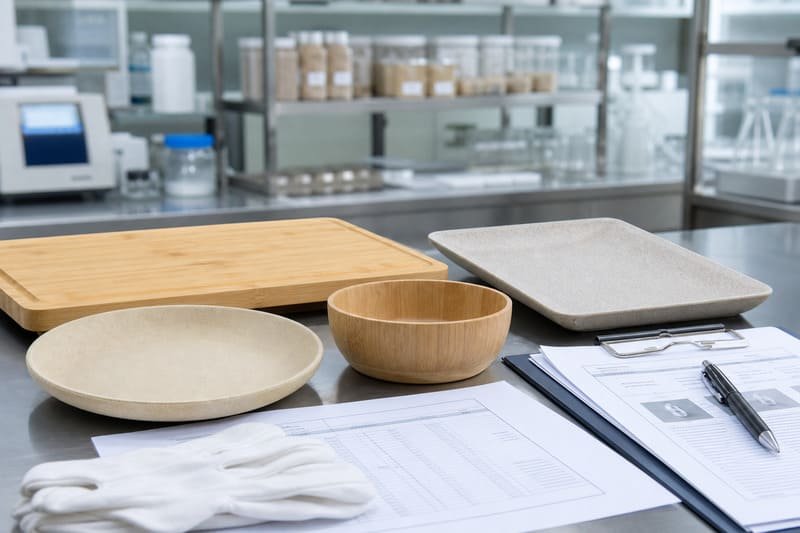
I often speak with buyers who assume “plant-based” automatically means safe for all foods and all temperatures. This is a dangerous assumption. In food-contact products, safety is not judged by marketing words. It is judged by whether the product releases substances into food within legal limits under intended use conditions.
The US FDA explains that food-contact substances need to be evaluated based on chemistry and potential migration. This principle applies whether the product looks natural, synthetic, simple, or complex.
Verifying Safety: What to Ask Your Supplier
Your supplier should be your partner in safety, not a barrier. A professional manufacturer should understand these questions and be ready to provide material details and test reports.
For Solid Bamboo Tableware
The main safety checkpoints are the adhesive and the finish.
1. Adhesive
Solid bamboo products are usually made from laminated bamboo strips. Those strips are held together by adhesive. You need to know whether the adhesive is suitable for food-contact products and whether there are any concerns related to substances such as formaldehyde.
Formaldehyde is a regulated chemical of concern, and buyers should understand where it may appear in adhesives or resins. The US EPA provides general information on formaldehyde, but for tableware sourcing, the key point is practical: ask your supplier for food-contact test reports and material declarations relevant to the exact product.
2. Surface Coating
Most solid bamboo products are coated to reduce water absorption and staining. The finish may be food-grade oil, lacquer, or another protective coating. Ask your supplier:
- What coating is used?
- Is it suitable for food contact?
- Is the test report for the exact coating and product?
- Is the product intended for dry food, wet food, hot food, or only serving use?
A solid bamboo serving board for bread and cheese has different risk considerations from a bamboo bowl used for hot soup.
For Bamboo Fiber Tableware
This is where buyers need to be more cautious. The binder is usually the main safety issue.
1. Resin Quality
The stability of bamboo fiber tableware depends heavily on resin quality, formulation, molding temperature, pressure, curing time, and post-curing control. Poor raw materials or incorrect manufacturing can increase the risk of melamine or formaldehyde migration.
The FDA has a useful Q&A on melamine tableware, including correct-use cautions. Studies have also shown that migration can be affected by conditions such as heat and acidic food, as discussed in research on melamine migration from tableware.
2. Correct Use Conditions
Even when a product passes food-contact testing, buyers still need to define correct use. For example:
- Is it suitable for hot food?
- Is it suitable for acidic food?
- Is it dishwasher safe?
- Is it microwave safe?
- Is it suitable for children’s tableware?
- What temperature and duration limits apply?
A test report is only useful when it matches the exact product material, color, coating, production process, and destination market. A generic report for a different item, different color, or older production batch may not be enough.
Simple Rule for Buyers
Never accept:
“It is eco-friendly, so it is safe.”
Instead, ask:
“What is the full material composition, and can you provide the correct food-contact test report for my target market?”
Are Bamboo Fiber Tableware Products Allowed in My Target Market?
Buyers should not evaluate bamboo fiber tableware only by appearance or price. The first question should be where the product will be sold.
Before choosing bamboo fiber tableware, confirm your target market first. Some regions, especially the European Union, have taken a strict position on bamboo-melamine plastic food-contact products. A product that can be sold in one market may not be acceptable in another without specific compliance proof.
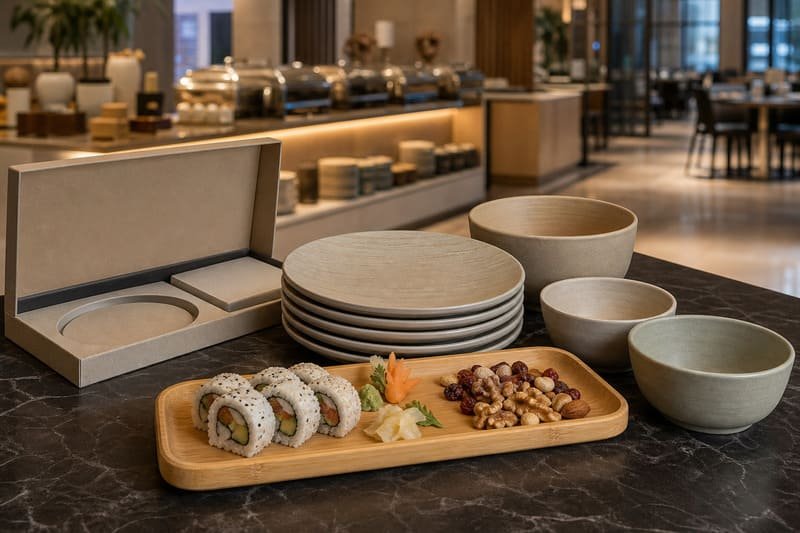
This is one of the most important sourcing lessons I share with new buyers. A supplier may say, “We have exported this product before,” but that does not automatically mean it is acceptable for your market, your product category, or your sales channel.
United States
For the US market, buyers usually focus on FDA food-contact compliance and correct-use instructions. If the product is melamine-based or contains melamine-formaldehyde resin, it should not be marketed or used in ways that conflict with FDA guidance. Microwave use is especially sensitive and should be clearly avoided for melamine-type products.
European Union
The EU market requires much more caution for bamboo-melamine composites. The European Commission provides general information on food contact materials, and several European authorities have taken action against bamboo-melamine plastic tableware.
The Dutch NVWA, for example, has published specific information on bamboo-melamine tableware, warning consumers and businesses about this category. If your target market is the EU, do not assume bamboo fiber tableware is acceptable simply because it contains bamboo powder. You need market-specific legal confirmation and valid test documentation.
Children’s Tableware
Children’s dinnerware requires extra caution. Parents often use children’s plates and bowls with warm food, acidic fruit, repeated washing, and sometimes incorrect heating. If a product is colorful, lightweight, and shatter-resistant, it may look attractive for kids’ collections, but buyers must be stricter with material claims, test reports, labeling, and use instructions.
I do not recommend marketing bamboo fiber tableware as “plastic-free” unless the supplier can prove the exact binder system and the claim is accepted in the destination market.
Buyer’s Compliance Checklist
| Product Type | Key Risk | Documents to Ask For | Practical Notes |
|---|---|---|---|
| Solid bamboo board or tray | Adhesive and coating | Food-contact test report for coating; material declaration; formaldehyde-related data if applicable | Best for dry or semi-dry serving use |
| Solid bamboo bowl | Moisture absorption, coating durability | Food-contact test report; coating specification | Not ideal for soup, long soaking, or high-temperature washing |
| Bamboo fiber plate or cup | Melamine/formaldehyde migration | Overall migration test; specific migration test; market-specific compliance report | Be very careful with EU market restrictions |
| Kids’ bamboo fiber set | Heat, acidic food, repeated use, safety perception | Full food-contact report; labeling review; correct-use instruction | Avoid vague “natural” or “plastic-free” claims |
| A5 melamine alternative | Melamine/formaldehyde migration if misused | FDA/LFGB/EU-related test reports depending on market | Durable, but not for microwave, oven, or direct flame |
How Do I Choose the Right Bamboo Tableware for My Business?
You may be interested in bamboo, but not sure which type matches your restaurant, hotel, retail store, or e-commerce brand. Choosing the wrong material can lead to breakage, washing problems, compliance issues, or customer complaints.
Match the material to the use case. Solid bamboo is strong for natural presentation items such as serving boards, trays, and salad bowls. Bamboo fiber may offer molded shapes and colors, but requires strict compliance review. For high-frequency commercial dinner plates and bowls, food-grade A5 melamine is often a more practical option when used correctly.
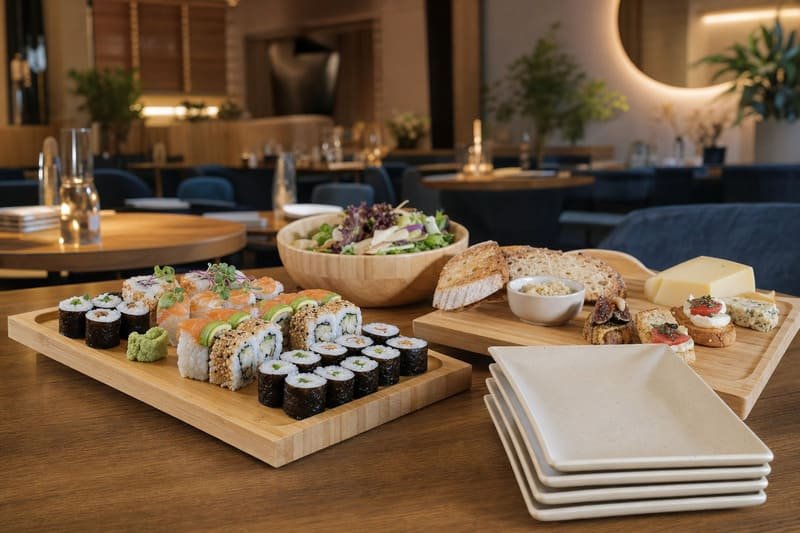
The best choice is not about which material is “better” in general. It is about which material is right for the job. I usually guide buyers through three questions:
- What food will the product touch?
- How will the product be washed and used every day?
- What claims will the brand make to customers?
A rustic cafe and a high-volume hotel buffet have very different needs. Their tableware choices should reflect that.
For Restaurants, Hotels, and Cafes
Function comes first.
I have worked with restaurant buyers who use solid bamboo boards for cheese, bread, appetizers, sushi, or charcuterie. The natural grain gives a warm, organic presentation and supports a farm-to-table or eco-luxe brand image. For these uses, solid bamboo can be excellent.
But I would not recommend solid bamboo as a main dinner plate for saucy, oily, or very hot dishes in a high-volume restaurant. Bamboo can absorb moisture, stain, crack, or warp if it is soaked or exposed to aggressive washing. The USDA FSIS also gives general safe-handling advice for cutting boards, reminding food businesses that board material and cleaning practices matter.
For daily, high-frequency washing, pure bamboo is usually not the most practical material. In those cases, high-quality A5 melamine can offer better durability, lower breakage risk, and easier maintenance, provided it is used correctly and never placed in a microwave or oven.
For Retail and E-commerce Brands
Retail buyers need to think about both product performance and consumer perception.
A premium homeware brand may successfully sell solid bamboo salad bowls, trays, or serving utensils because customers understand them as natural serving pieces. The visual value is strong.
A children’s tableware brand may be attracted to bamboo fiber because it can be colorful, lightweight, and shatter-resistant. However, this category requires much more diligence. You need to confirm whether the product can be legally sold in the destination market, whether the claims are acceptable, and whether test reports cover the exact item.
Where A5 Melamine Fits In
In real sourcing projects, the choice is not always only between solid bamboo and bamboo fiber. Buyers often compare bamboo fiber products with A5 melamine because both are molded, durable, and customizable.
A5 melamine does not have the same “natural bamboo” story, but for commercial foodservice it is often more stable and practical. It can be made with wood-grain, stone-effect, or matte natural designs if the buyer wants an organic look without the maintenance issues of real bamboo.
Here is a practical decision table:
| Business Goal | Solid Bamboo Is a Good Fit | Bamboo Fiber Requires Caution | A5 Melamine Is Often a Better Fit |
|---|---|---|---|
| Natural presentation | Serving boards, sushi trays, bread boards | Possible, but less natural in feel | Wood-grain melamine can imitate the look |
| Eco-luxe brand image | Salad bowls, fruit platters, premium serving pieces | Only if claims are legally supported | Good for durable “natural style” collections |
| High-volume daily dining | Not ideal | Possible only with strong compliance proof | Strong option for plates, bowls, and trays |
| Dishwasher durability | Generally not recommended | Depends on product and test data | Usually strong for commercial use |
| Outdoor or casual dining | Can work for serving, but not shatterproof | Lightweight and shatter-resistant | Excellent due to durability |
| Kids’ dinnerware | Limited use | High compliance sensitivity | Common option, but still not microwave safe |
| Custom branding | Laser-engraved logos | Pantone colors and decals possible | Full-color patterns and complex logos possible |
The most sustainable product is not always the one with the most natural-sounding name. In B2B sourcing, the more responsible choice is often the one that is safe, compliant, durable, correctly used, and less likely to be replaced frequently.
Correct Use: What to Avoid
| Material | Avoid |
|---|---|
| Solid bamboo | Long soaking, dishwasher, microwave, oven, high-temperature sterilizing cabinets, very wet or oily food for long periods |
| Bamboo fiber / melamine composite | Microwave, oven, boiling for long periods, high-temperature acidic food, unclear food-contact use |
| A5 melamine | Microwave, oven, direct flame, use after cracking or surface damage |
These use instructions should be included in your packaging, product manual, or retail listing. Clear instructions protect both the end user and your brand.
Frequently Asked Questions About Sourcing Bamboo Tableware
You probably have practical sourcing questions about order quantities, customization, cost, samples, and shipping. These details often determine whether a project is viable for your business.
The most common sourcing questions involve Minimum Order Quantity, customization methods, price differences, sample approval, test reports, and shipping terms. For custom tableware, MOQ is often around 3,000 pieces per design, but it can sometimes be flexible when using existing molds or standard shapes.
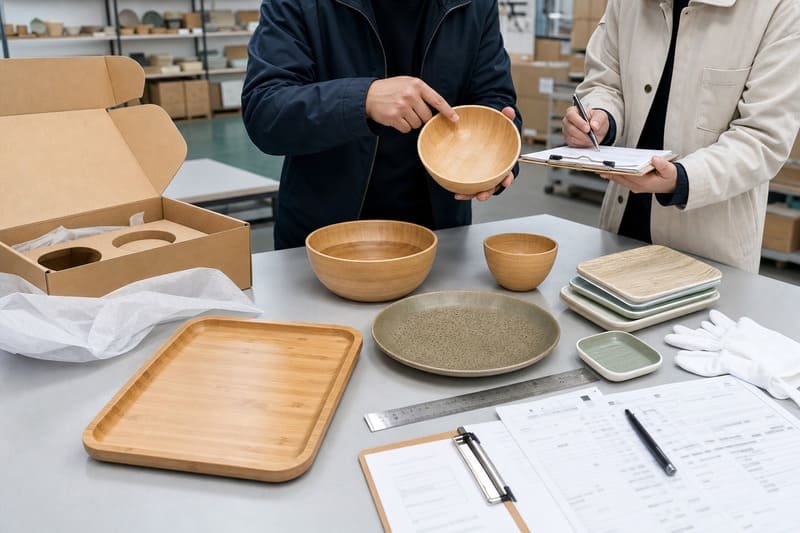
These are the real-world questions I discuss with buyers every week. A product idea is only useful if it can be produced, tested, packed, and delivered in a way that fits your business model.
1. What Is a Typical Minimum Order Quantity?
For most custom tableware, including solid bamboo products, bamboo fiber products, and melamine alternatives, the standard factory MOQ is often around 3,000 pieces per design.
This is because production setup, material preparation, printing, molding, packaging, and inspection all require minimum efficiency. However, for restaurants, hotels, or new brands that want to test the market first, lower MOQs may be possible if you choose:
- an existing factory shape;
- a standard size;
- a simple logo;
- neutral packaging;
- available material or color.
I usually advise new buyers to ask suppliers about trial order options instead of immediately developing a completely new mold.
2. How Can I Customize Bamboo Tableware?
Customization methods depend on the material.
Solid Bamboo
Solid bamboo is usually customized by laser engraving. This works well for:
- restaurant logos;
- hotel branding;
- cafe names;
- simple text;
- gift packaging;
- private-label serving boards.
Laser engraving creates a clean, natural, burnt-in look. It is subtle and premium, but it is not suitable for full-color artwork.
You can also develop a new shape or size, but this requires more work and may involve tooling, cutting fixtures, and additional sample development costs.
Bamboo Fiber
Bamboo fiber products are molded, so customization is closer to melamine tableware. You may be able to customize:
- Pantone color;
- surface texture;
- full-color decal;
- printed pattern;
- logo placement;
- packaging design.
This makes bamboo fiber attractive for children’s tableware, seasonal collections, and retail sets. But again, the compliance review must come first.
A5 Melamine
A5 melamine offers strong customization flexibility. It can support:
- full-surface patterns;
- wood-grain effects;
- stone-effect designs;
- matte or glossy finishes;
- restaurant logos;
- hotel buffet collections;
- private-label packaging.
For many foodservice buyers, A5 melamine is the practical alternative when they want durability, design flexibility, and easier washing.
3. Is Solid Bamboo More Expensive Than Bamboo Fiber?
Not always.
The price depends on size, thickness, finish, shape, processing time, and packaging. A small solid bamboo coaster may be cheaper than a large bamboo fiber dinner plate. But a thick solid bamboo serving board or butcher block may be more expensive because it uses more raw material and requires more labor for lamination, cutting, sanding, and finishing.
In general:
| Product | Main Cost Drivers |
|---|---|
| Solid bamboo board | Bamboo thickness, lamination quality, sanding, coating, engraving |
| Solid bamboo bowl | Shape complexity, coating, manual finishing |
| Bamboo fiber plate | Mold, resin formulation, color, decal, curing process |
| A5 melamine plate | Mold, material grade, decal, finishing, inspection |
Do not compare only unit price. Compare expected lifespan, compliance risk, breakage rate, washing cost, and customer complaints.
4. What Should I Know About Shipping?
Tableware is bulky and can be heavy, so shipping is a significant part of the total landed cost. Whether you choose solid bamboo, bamboo fiber, or melamine, you should ask for:
- carton size;
- gross weight;
- quantity per carton;
- pallet loading if needed;
- sea freight estimate;
- air freight option for samples;
- DDP shipping possibility;
- destination port or door delivery cost.
For smaller B2B buyers or companies new to importing, I often suggest asking about DDP shipping. DDP means Delivered Duty Paid, where the supplier or forwarder handles freight, customs clearance, duties, and delivery to your address. It is usually not the cheapest option, but it is simpler and more predictable for first-time importers.
5. Should I Approve Samples Before Mass Production?
Yes. Never skip sample approval.
For bamboo tableware, I recommend checking:
- material appearance;
- smell;
- weight;
- surface smoothness;
- coating quality;
- logo position;
- color difference;
- packaging fit;
- washing performance;
- test report consistency.
For molded products, especially bamboo fiber or melamine, confirm that the sample material matches the material in the test report. If the factory changes color, resin, filler ratio, coating, or production process, the old test report may no longer be enough.
6. What Questions Should I Ask a Supplier Before Ordering?
Here is the short list I recommend:
- Is this product solid bamboo or bamboo fiber composite?
- If it is bamboo fiber, what resin binder is used?
- Is the product suitable for my target market?
- Can you provide valid food-contact test reports?
- Do the reports match this exact product, color, and material?
- Is the product dishwasher safe?
- Is it microwave safe? If not, will this be stated clearly?
- What is the recommended use temperature?
- What is the MOQ for existing shape and custom design?
- Can I approve a pre-production sample before mass production?
A professional supplier should be able to answer these questions clearly.
Conclusion
To choose the right bamboo tableware, first distinguish between solid bamboo and bamboo fiber. Solid bamboo is closer to a natural wood product, but buyers still need to check adhesives, coatings, and maintenance requirements. Bamboo fiber tableware may look eco-friendly, but it is usually a resin composite and requires much stricter food-contact and market compliance review.
For restaurants, hotels, and cafes, solid bamboo can be excellent for natural presentation pieces such as serving boards and trays. For high-frequency dinnerware, food-grade A5 melamine is often more practical when used correctly. For retail and e-commerce brands, bamboo products can be attractive, but claims like “eco-friendly,” “natural,” or “plastic-free” must be supported by real material evidence and accepted in the target market.
My practical advice is simple:
Do not choose bamboo tableware only because it sounds sustainable. Choose it because the material, safety documents, usage conditions, and business case all make sense.
