
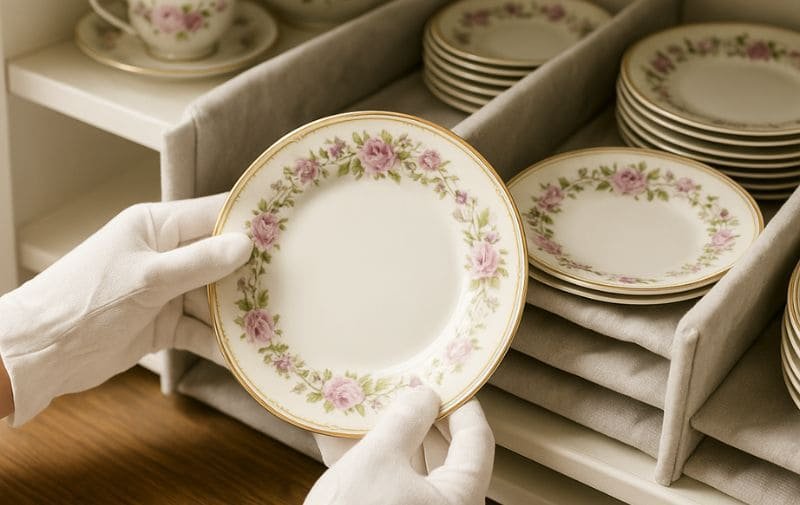
You’ve just inherited your grandmother’s beautiful set of china, or perhaps you’re seeing the words “Fine China,” “Bone China,” and “Porcelain” while shopping and feel completely lost. What’s the difference, what is it actually worth, and are you going to break it just by looking at it?
“China” dinnerware refers to high-quality ceramic tableware made from porcelain. The name originates from its country of origin, where the technique was perfected centuries ago. Its value comes from its unique combination of delicate appearance, surprising strength, and often, prestigious brand heritage.
That’s the simple answer, but it barely scratches the surface. As someone who has handled countless sets of dinnerware over the years, I can tell you there are more myths and misunderstandings about china than any other material. Forget what you think you know. We’re going to break down what it really is, what it’s worth, and how you can actually use and enjoy it without fear.
Last Updated: Sep 1th 2025 | Estimated Reading Time: 8 Minutes
Why Do We Call Dinnerware “China”?
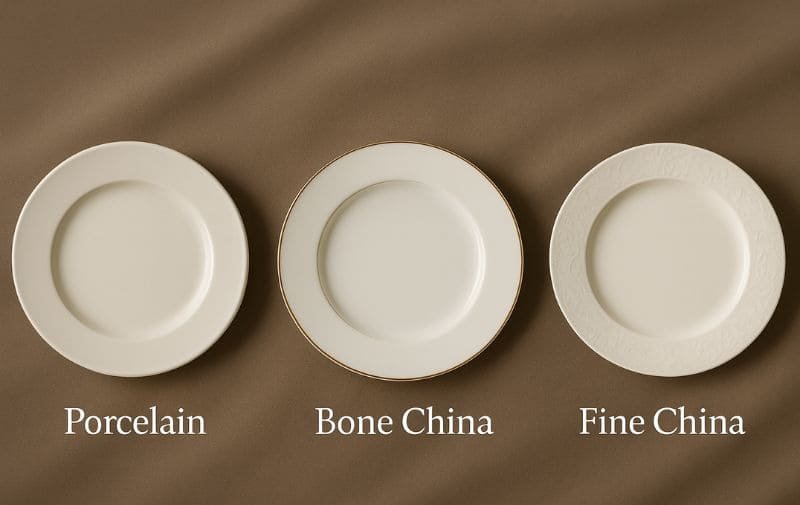
This is the single biggest point of confusion, and I want to clear it up immediately. In the modern dinnerware industry, “china” is a historical and marketing term, not a distinct technical material.
When you see “Fine China” on a box, it is simply a label for high-quality porcelain dinnerware. In most modern contexts, the terms “china” and “porcelain” are functionally interchangeable, referring to the same vitreous (glass-like) ceramic material.
So why do we call it china at all?
A Quick Trip Back in Time
The story begins over a thousand years ago in China, during the Tang dynasty. Artisans there perfected a method of firing a special clay mixture (featuring a white clay called kaolin) at incredibly high temperatures. The result was a material that was strong, white, and translucent—what we now call porcelain.
When this magical tableware first arrived in Europe via the Silk Road, it was unlike anything they had ever seen. It was so coveted and so exclusively from China that the material itself simply became known as “china.” For centuries, “china” was synonymous with the finest, most luxurious tableware money could buy. Today, the name sticks as a sign of quality.
Insider Tip: Don’t get stressed trying to decide between a set labeled “Porcelain” and one labeled “Fine China.” They are likely made from the very same material. Instead, focus on the brand’s reputation, the design you love, and the practical care instructions.
What Makes Bone China So Light, Strong, and Translucent?
Just when you think you’ve got it figured out, you see a third term: “Bone China.” Now, this is a distinct and superior type of porcelain with a secret ingredient that gives it almost magical properties.
Bone china is a special type of porcelain that is mixed with a minimum of 25% calcified bone ash. This ingredient dramatically increases the material’s strength and translucency, allowing it to be made thinner and more delicately than regular porcelain.
The bone ash acts as a “flux” during the firing process, which means it helps the other materials melt together at a lower temperature. This creates a uniquely strong, yet lightweight molecular structure. It’s this combination of delicate, elegant appearance and surprising chip-resistance that makes bone china the preferred material for luxury dinnerware.
How to Tell the Difference: A Comparison
The easiest way to identify true bone china is with a simple light test. Hold a plate up to a bright light and place your hand behind it. If it’s bone china, you should be able to see the faint shadow of your fingers through the plate. Regular porcelain is more opaque.
| Feature | Porcelain (Fine China) | Bone China | Stoneware |
|---|---|---|---|
| Key Ingredient | Kaolin, Feldspar, Quartz | Kaolin, Feldspar, Quartz, + Bone Ash | Stoneware Clay (less refined) |
| Appearance | Bright white, opaque | Warm, soft white, translucent | Opaque, often earthy tones |
| Weight | Heavier and thicker for strength | Very lightweight and thin | Heaviest and thickest |
| Strength | Very durable | The most chip-resistant ceramic | Durable but can chip |
| Feel | Hard and smooth | Delicate and elegant | Rustic and substantial |
| Price Point | Mid to High | Highest | Low to Mid |
Can You Actually Put China in the Microwave and Dishwasher?
This is where the “fear factor” kicks in. Most people with a set of fine china are terrified to use it, worried that the dishwasher will ruin it or the microwave will cause a disaster. Let’s bust that myth right now.
The ceramic body of a porcelain or bone china plate is perfectly safe for both the microwave and dishwasher. The danger comes from metallic decorations—like gold, platinum, or silver rims—which will cause sparks (arcing) in a microwave.
It’s not the plate; it’s the paint. That beautiful gold trim on your grandmother’s china is actual metal. When put in a microwave, it will spark violently, which can burn the trim off the plate and potentially damage the appliance.
The Modern China Care Guide
Many modern china sets are now designed for everyday use, with microwave-safe inks and no metallic trim. The only way to know for sure is to check the bottom of the plate for the “microwave safe” and “dishwasher safe” symbols.
| Task | Do | Don’t |
|---|---|---|
| Microwave Use | DO check for the “microwave safe” symbol. DO use it freely if there is no metallic trim. | DON’T EVER microwave a piece with a gold, silver, or platinum rim or decoration. |
| Dishwasher Use | DO use a gentle, low-heat cycle. DO leave ample space between pieces to prevent clinking and chipping. | DON’T use harsh, abrasive, or citrus-based detergents, which can fade patterns over time. DON’T overcrowd the washer. |
| Hand Washing | DO use a soft cloth or sponge and mild soap. DO place a towel in the bottom of the sink to cushion the china. | DON’T use abrasive scouring pads, which can scratch the glaze and metallic details. |
| Stain Removal | DO use a gentle paste of baking soda and water to remove stubborn tea or coffee stains. | DON’T use harsh bleach or chemical cleaners. |
The Harsh Truth About Value: Sentimental vs. Monetary
The question “Is my china set worth anything?” is one of the most common—and most painful—to answer. The reality is, for the vast majority of inherited sets, the value is almost entirely sentimental, not monetary.
The resale market for used dinnerware is flooded. Tastes have changed, and formal dining is less common. Unless your set is from a premier luxury brand (like 18th-century Sèvres), a very rare pattern, or a famous designer, a typical 12-person set from the mid-20th century might sell for only $100-$400 on platforms like eBay or Replacements, Ltd., and that’s if you can find a buyer.
The real cost is its replacement value. If you break a single dinner plate from a current pattern by a brand like Wedgwood or Lenox, replacing that one piece could cost you anywhere from $50 to over $200.
THow Much is Your China Dinnerware Actually Worth?
This is often the most sensitive question, especially when it comes to an inherited set. The hard truth is that in most cases, the value of old china is almost entirely sentimental, not monetary.
Unless your dinnerware is a rare pattern from a premier luxury brand (like 18th-century Sèvres or a full set of Royal Copenhagen’s Flora Danica), a typical inherited set from the 20th century has a very low resale value, often just a few hundred dollars.
The market for used dinnerware is flooded, tastes have changed, and it’s difficult to find buyers for large, formal sets. The real cost is in its replacement value. If you break a single dinner plate from a current pattern by a brand like Wedgwood or Lenox, that one plate could cost you $50, $100, or even more to replace. This high replacement cost is the true financial liability of owning fine china.
Factors that Determine Value
- Brand: A set from a world-renowned maker like Meissen, Herend, or a very old Royal Doulton will always be worth more.
- Rarity & Pattern: Is it a common pattern produced for 50 years, or a rare design that was discontinued quickly?
- Completeness & Condition: A full, mint-condition set with serving pieces is far more valuable than a partial set with chips and cracks.
- Provenance: Can you prove it belonged to someone notable? This adds historical value.
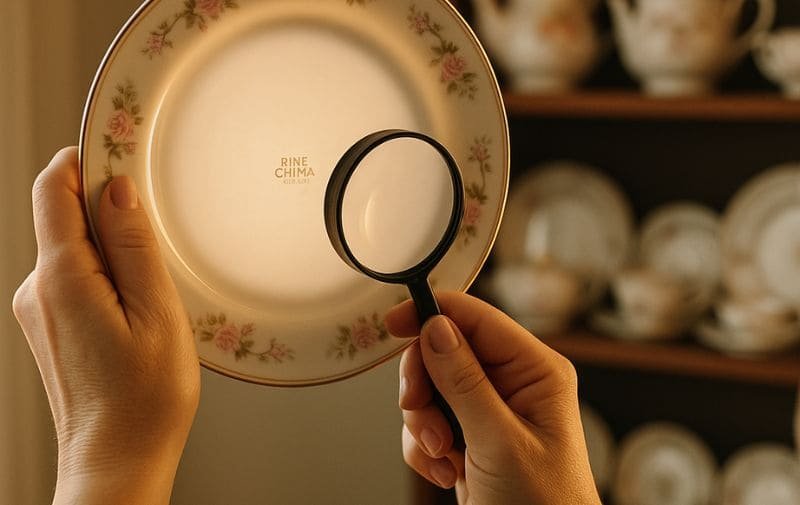
Insider Tip: Be aware of the modern global supply chain. Many famous “English” or “European” brands now have their dinnerware produced in state-of-the-art facilities in Asia to remain competitive. The brand heritage is in the design and quality control, but the “Made in…” stamp may surprise you. This doesn’t mean lower quality, but it’s a fact of the modern market.
Is Fine China Too “Special” for Its Own Good?
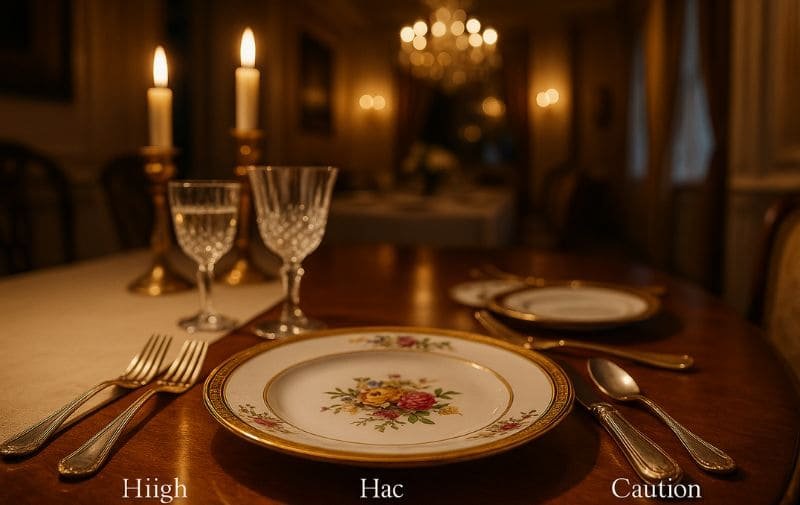
Now for a different perspective. I believe the greatest weakness of fine china is its perceived greatest strength: its preciousness. I call this the “Practicality Paradox.”
The “fear factor” associated with expensive china often means it sits in a cabinet, unused for years, becoming a museum piece in your own home. The most valuable dinnerware is the dinnerware you actually use and enjoy.
Think about it. We buy these beautiful sets for “special occasions,” but life is made up of ordinary days. So we eat off cheaper plates every day while the “good china” gathers dust. What’s the point? A meal with family on a Tuesday is a special occasion. Using beautiful things should be a part of everyday life. Materials like Corelle or even high-quality melamine are designed to be used daily without fear, and in that sense, they often bring people more practical joy.
Conclusion
China is more than just a plate; it’s a piece of history. It is beautiful, surprisingly strong porcelain that can, and should, be used. Don’t let the confusing terms or the fear of breaking it prevent you from enjoying it. The true worth of any dinnerware set is not its resale price, but the memories you create around it.
Frequently Asked Questions (F.A.Q.)
1. What is the single most durable type of dinnerware?
While bone china is the most durable ceramic, the title for the most durable overall dinnerware for everyday use is a tie between laminated glass (like Corelle) and high-quality, 100% A5 melamine. Both are exceptionally resistant to chipping, breaking, and shattering, making them ideal for families and high-use environments.
2. Is it safe to eat off of very old or antique china plates?
You should be cautious. Antique china, especially pieces made before the 1970s from unregulated sources, can sometimes contain lead or cadmium in their glazes and painted decorations. It’s safest to use these pieces for decorative purposes only.
3. How can you tell if a china set is valuable?
The value depends on four key factors: Brand (premier names like Herend, Meissen, early Spode), Pattern (rarity and desirability), Condition (no chips, cracks, or fading), and Completeness (a full service for 8, 10, or 12 with serving pieces is more valuable than a mismatched lot).
4. Why is bone china so expensive?
The price reflects several factors: the cost of the high-quality raw materials (especially the processed bone ash), the technically demanding and multi-stage manufacturing process, the high level of artistry and hand-decoration involved, and the heritage of the luxury brand producing it.
5. What is the real difference between “fine china” and cheap porcelain I can buy at a department store?
The difference lies in the quality of materials, the firing process, and quality control. Fine china uses a higher grade of refined kaolin clay, is fired at precise temperatures to ensure full vitrification (making it non-porous), and has a thinner, more elegant body. Cheaper porcelain may be thicker, less durable, and more prone to defects.
6. Can I use my grandmother’s china for everyday use?
Absolutely! The best way to honor an heirloom is to use it and create new memories with it. As long as it doesn’t have metallic trim and you’re willing to hand-wash it, using it for a simple weekly dinner can be a wonderful tradition. The bigger risk isn’t breaking it, but never enjoying it at all.
Recommended:
