
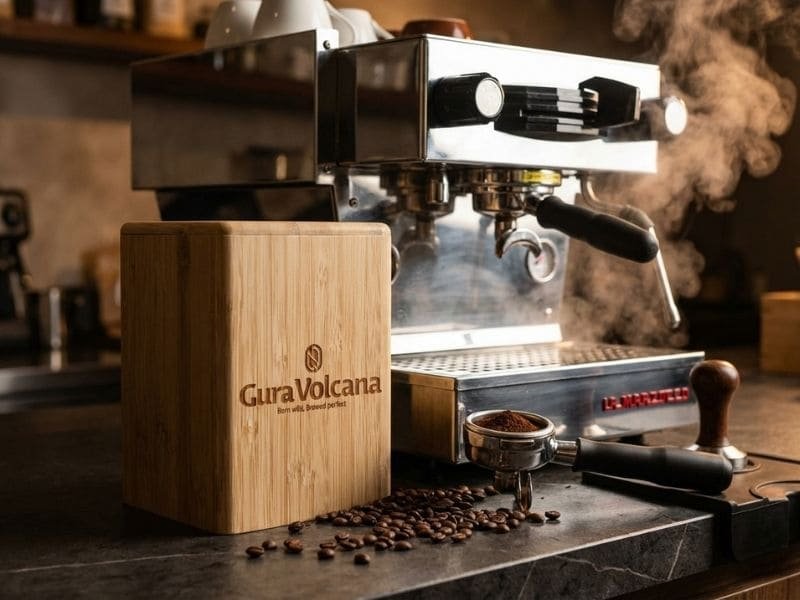

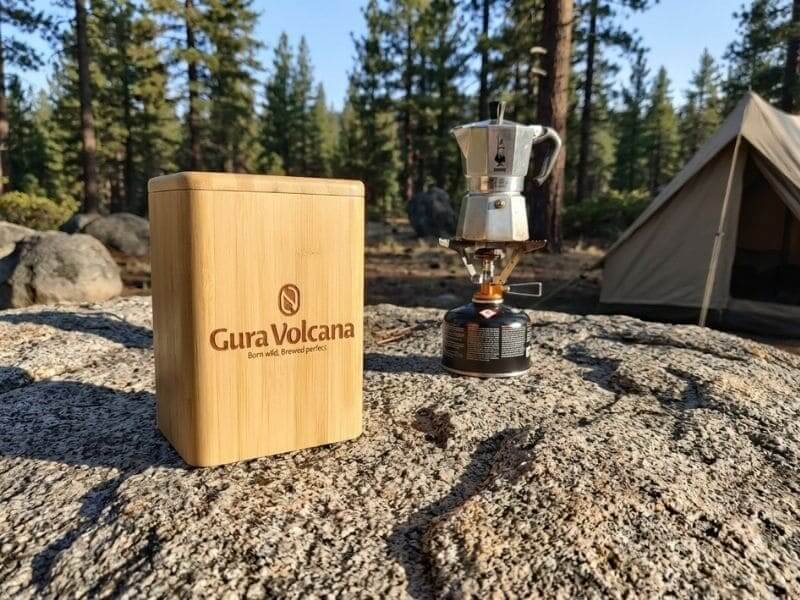
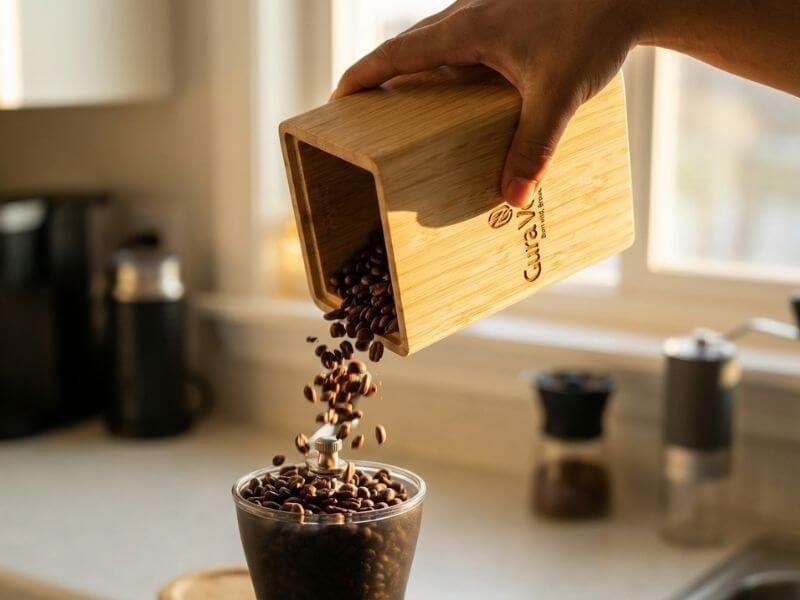
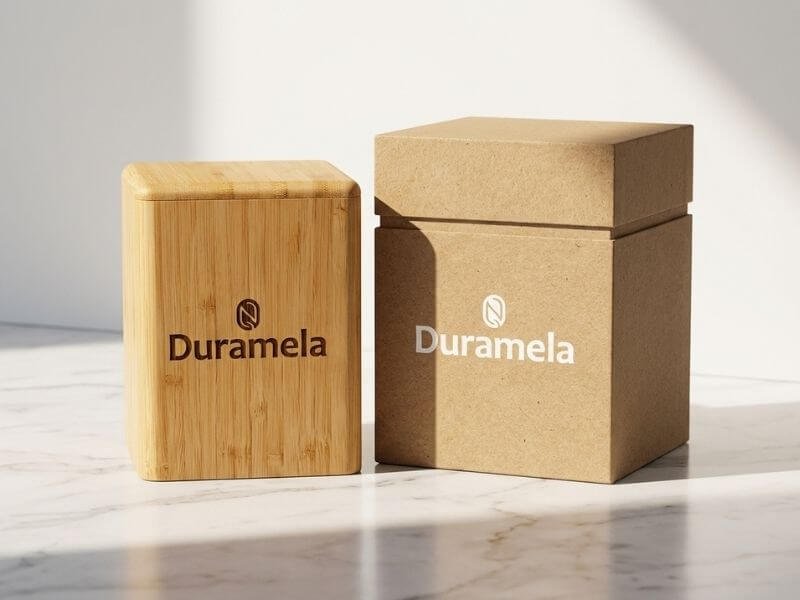
Your premium coffee beans, loose-leaf teas, or organic grains lose value the moment they are exposed to air. Standard packaging is functional, but a bamboo storage box is a statement of quality preservation.
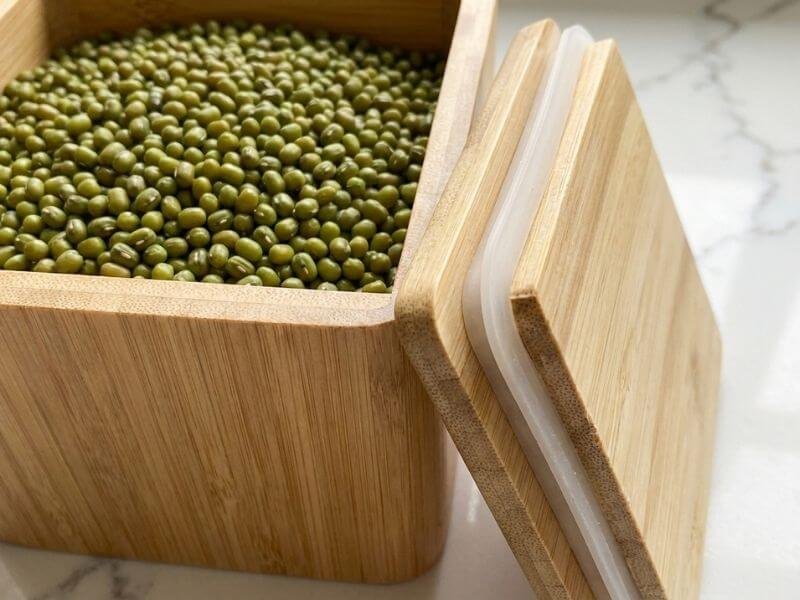
Buyers are not just looking for a container; they are looking for a “vault” for their pantry. By integrating a precision-fitted lid with a food-grade silicone ring, the contents are locked away from oxidation and humidity. Whether designed as a minimalist square block or a cylindrical bamboo canister, the result is the same: the “pop” sound of the airtight seal opening, reassuring the customer that freshness has been maintained.
Why Brands Upgrade to Bamboo Enclosures:
The efficacy of a storage box lies in the tolerance between the lid and the body. If the gap is too wide, air enters; too tight, and the lid becomes impossible to remove. We don’t just “make boxes”; we engineer a micro-environment for your product.
Here is how the bamboo canister architecture actively protects flavor:
Precision Groove Machining: Unlike cheap storage options where the lid merely sits on top, our lids feature a deep, CNC-machined groove. This houses the silicone ring perfectly, ensuring that when the lid is pressed down, it creates consistent radial pressure against the container walls, locking out oxygen.
High-Elasticity Silicone Ring: The heart of the seal. We use food-grade, high-memory silicone that maintains its shape after thousands of openings. It creates a friction barrier that prevents air exchange, crucial for keeping coffee beans from going stale or spices from losing their potency.
Internal Moisture Barrier: Raw bamboo is porous. To prevent the container itself from absorbing moisture or oils from your coffee beans, the interior is coated with a Food-Safe Water-Based Lacquer. This seals the wood fibers, ensuring the box remains odorless and hygienic, ready for refills without retaining previous flavors.
UV Protection by Design: Light is the enemy of coffee and tea. Unlike clear glass or plastic jars, the solid bamboo construction provides 100% opacity. This blocks harmful UV rays from degrading the quality of light-sensitive ingredients, acting as a natural darkroom for your premium goods.
Technical Specs: The Architecture of Storage
| Component | Specification | Function |
|---|---|---|
| Material | Solid Carbonized Bamboo | High density, resistant to warping. |
| Sealing Mechanism | Food-Grade Silicone Ring | Creates airtight friction seal; removable for cleaning. |
| Standard Capacity | Custom (e.g., 250g / 500g / 1kg) | Tailored to density of contents (Coffee vs. Flour). |
| Surface Finish | Water-Based Lacquer | Oil-resistant, prevents stain absorption. |
| Typical Size (Coffee) | 11cm x 11cm x 14cm | Fits standard 250g coffee bag or loose beans. |
| Branding Area | 4 Sides + Lid Top | Maximum visibility for laser engraving. |
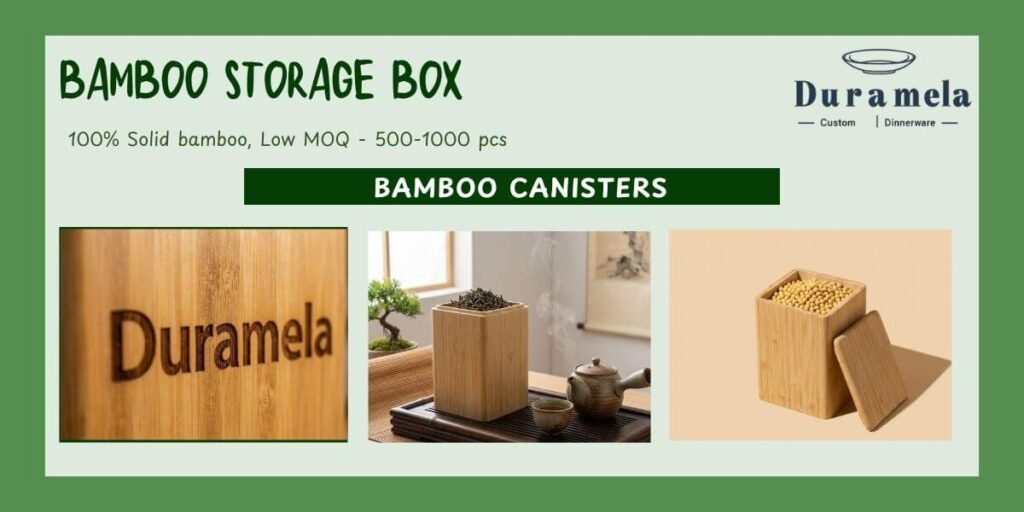
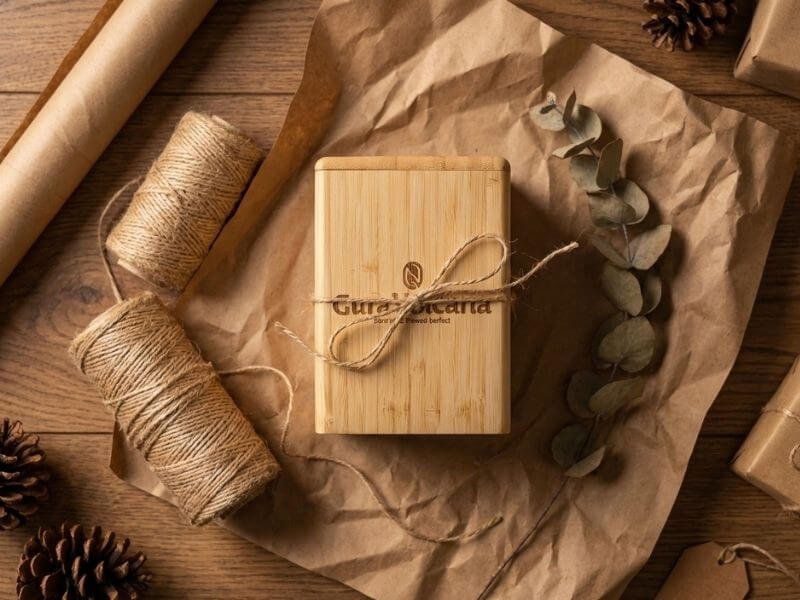
Unlike slender cutlery, a bamboo storage box with lid offers substantial surface area. It is essentially a bamboo billboard for your brand.
A reality check on logistics: Bamboo storage boxes are bulky. Unlike flat plates or nesting bowls, fully assembled boxes ship “full of air.” If you ship these by air, you are essentially paying premium rates to transport empty space inside the box.
The “Volume Weight” Trap: Air freight carriers charge based on volume, not just dead weight. A lightweight bamboo box takes up significant space. Shipping a 1,000-piece order by air could easily cost more than the product itself. Sea Freight is mandatory to maintain a competitive unit cost.
Plan for the Ocean: To make the economics work, you must factor in a 30-45 day transit time. We help you plan inventory lead times so you never have to panic-ship by air.
Smart Packaging Logic: To minimize damage without wasting space, each box is individually packed in a fitted inner box (Kraft or Color). Master cartons are engineered to stack perfectly in a container, maximizing every cubic meter of the 20ft or 40ft container (FCL).
FCL vs. LCL: For these high-volume items, filling a Full Container Load (FCL) offers the best shipping rate per unit. If your order is smaller (Less than Container Load – LCL), we palletize securely to prevent crushing, but FCL is where the real margin savings are.
H2: Validate Size and Seal Before Production
You cannot guess with volume. 250g of dark roast coffee takes up more space than 250g of light roast.
The Prototyping Protocol:
Yes, when equipped with a high-quality silicone sealing ring. The bamboo canisters create an airtight environment that significantly slows down oxidation. For long-term storage of premium beans, we recommend keeping the box in a cool, dry place, as bamboo is a natural insulator against temperature fluctuations.
No, provided the interior is correctly finished. Our boxes are coated internally with a food-safe water-based lacquer. This creates a barrier that prevents oils and aromas from penetrating the bamboo fibers, allowing you to switch contents (e.g., from coffee to tea) after a thorough wash.
Yes. The silicone ring is removable for cleaning. Over years of use, if the elasticity decreases, it can be replaced. The groove design is standard, making maintenance simple for the end-user.
Storage boxes have a high “Dim Weight” (Dimensional Weight). Even if the box is light, it takes up significant space. Shipping a 1,000-piece order by air would likely cost more than the product itself. Sea freight is the standard transportation method for this category.
Absolutely. While square and cylindrical shapes are standard, we can develop hexagonal, oval, or stackable designs. Custom shapes require a new mold or CNC programming setup, which is discussed during the design phase.
Moisture control is critical. Each box is packed with a silica gel packet, and the master cartons are sealed properly. We ensure the bamboo moisture content is strictly controlled (8-12%) before manufacturing to prevent warping or mold growth during the weeks at sea.
WhatsApp us